

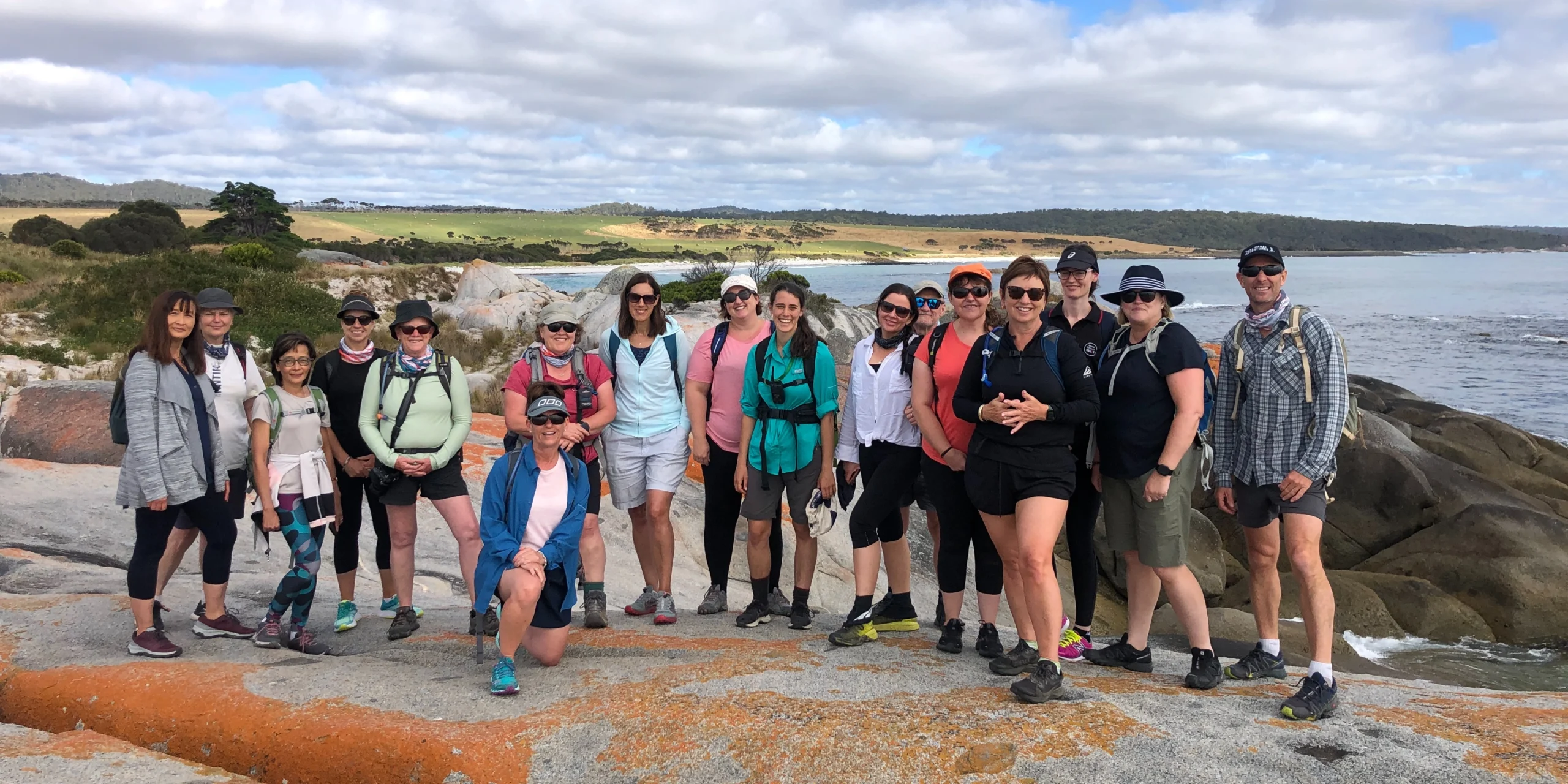
Tasmania draws in adventurers from all over Australia and the rest of the world, and for good reason. In this small island state, you can find rocky orange coastlines, a cliff edge overlooking deep blue seas, or ancient forests that immerse you instantly in nature. This is one of the best places on Earth to lace up your boots and explore.
But if you’re new to hiking, or just trying to figure out where to start, the sheer variety of Tasmania hikes can feel a little overwhelming. How long is too long? How hard is too hard? And which trails are actually worth your time?
That’s where we can help you out. We’ve rounded up three of the best hikes in Tasmania, one for each skill level, so you can find the perfect fit no matter where you’re starting from. You’ll get the full rundown on the gentle but breathtaking Bay of Fires, the dramatic Three Capes Track, and the rugged South Coast Track, plus some practical tips to help you choose the right trail for you.
Bay of Fires Track (Easy)
If you’re new to multi-day hiking, the Bay of Fires Track is about as good an introduction as Tasmania offers. Stretching 57km along the northeast coast over four days, you’ll experience white-sand beaches, bright turquoise water, and the track’s signature granite boulders coated in vivid orange lichen. The scenery is more of an icon than the difficulty, which is perfect for those still finding their footing in hiking (no pun intended).
The terrain
The elevation gain at the Bay of Fires is minimal compared to most Tasmanian multi-day tracks. You’re largely walking along coastal trails and beach, which makes the distance manageable even for hikers who haven’t done much overnight walking before. If you’ve taken a break from hiking and want a route that eases you back in, this is a solid choice.
What to look forward to
Wildlife sightings are part of the experience, so keep an eye out for wallabies along the track and birds near the water. On warm days, the coves offer an irresistible swim, and many of them are pristine given how few people reach them by road. Several campsites are positioned near the water’s edge, so evenings come with the added bonus of watching the light change over the water once you’ve set up your tent.
When to go
Late spring through autumn is generally considered the most comfortable window for walking the Bay of Fires trail. Days are longer, temperatures are comfortable for walking and swimming, and the weather is more stable than the colder months. Summer is the busiest window, so if you’re planning to walk between December and February, sort your permits and campsite bookings well in advance.
The guided option
For those who’d rather not manage gear, meals, and navigation on top of everything else, we have a Bay of Fires Walking Escape that takes care of all of it. Expert local guides lead the way, meals are covered, and you’re walking alongside a community of like-minded people rather than figuring it out alone. It’s particularly well suited to solo travellers and first-timers who want the experience without the logistics.
If you’re not ready for multi-day hiking just yet, it’s worth checking out Victoria’s best bush walks across all skill levels to build confidence closer to home before committing to a longer trail.
Three Capes Track (Moderate)
The Three Capes Track covers 48km over 3 days through Tasman National Park on the state’s southeast coast, with sheer dolerite columns plunging dramatically into the Tasman Sea below. This is where Tasmania gets dramatic.
The terrain
Expect a mix of coastal heath, tall eucalypt forest, and exposed clifftop ridgelines with elevation changes throughout. Nothing on the Three Capes will break a prepared hiker, but it will get the legs and lungs working in some sections. This track suits hikers who have already completed at least one multi-day walk and feel comfortable carrying a pack over uneven ground.
The track visits Cape Raoul, Cape Pillar and Cape Hauy, each delivering open sky and stunning views.
Don’t wait too long to book
The track operates on a fixed-itinerary system managed by the Tasmania Parks and Wildlife Service. Huts are assigned per night, so there’s no freedom to slow down, speed up, or swap your route on a whim. Spots fill quickly, particularly during the summer months. Book as early as the system allows if you’re planning a summer trip.
Getting fit for it
The Three Capes will be far more enjoyable if you prepare for it. In the weeks leading up, build your base with progressively longer loaded day hikes and regular hill training to get your legs used to climbing with weight on your back. If you’ve been on day hikes and want to take the next step, this is a natural progression.
It’s also worth thinking about what multi-day fitness actually feels like beyond day one. Tired legs on day two feel very different from tired legs on a single outing. The same conditioning approach used to prepare for summit walks like the Mount Kosciuszko hike translates well here. It’s better to apply consistency over weeks, not cramming a big walk in the week before you go.
Do the preparation, book early, and the Three Capes will deliver an experience that stays with you long after you get home.
South Coast Track (Challenging)
This is Tasmania’s most demanding long walk, clocking in at roughly 85km through Southwest National Park and completed over approximately 6 days depending on conditions and pace. Southwest National Park is one of the most remote wilderness environments in Australia, and you will feel that remoteness immediately.
Why it’s hard
Aside from the length and climbs, the route includes sections with limited or no marked path, requiring active navigation. River crossings are a feature of the route and should be planned for. Ridgelines are exposed to weather that can shift without warning. Southwest Tasmania’s weather is famously unpredictable, and conditions can change rapidly at any time of year.
Why you should do it anyway
This may sound intimidating, but the rewards match the effort. Huon pine forests line river valleys that rarely see foot traffic. Beaches stretch for kilometres with zero infrastructure because they are only accessible by foot. The sense of solitude in this landscape is unlike anywhere else in Australia. It’s a place that feels unchanged, because it is.
Navigation and safety are non-negotiable
Good topographic map-reading skills and compass navigation are essential before you set foot on this trail. Wilderness first aid knowledge is strongly recommended. A Personal Locator Beacon (PLB) is strongly recommended and considered essential by experienced wilderness trekkers. If you’re still building your skills and fitness, getting into challenging day hikes near you and coming along to our Bush Navigation Day Course are useful ways to develop both before committing to something this remote.
Logistics to plan well in advance
Many hikers begin at Melaleuca airstrip (accessible via light aircraft) and walk out to Cockle Creek, or travel the route in reverse; confirm current access logistics with Parks Tasmania before planning. There are no resupply points along the way, meaning you need to carry all your food from the beginning. Pack for cold, wet, and windy conditions regardless of what the forecast says when you leave. Your pack will be heavy so be prepared for that.
If this level of wilderness challenge is what you’re working towards, check out what a guided adventure trip looks like as a stepping stone before going fully self-sufficient into Southwest Tasmania.
How to choose the right trail for you
Now you’ve seen what these three trails involve, it’s time to figure out which one is right for you.
1. Be honest about your experience
The Australian Walking Track Grading System grades trails on their hardest single element, not their average difficulty. The South Coast Track demands more than fitness and underestimating its off-track terrain or weather variability can cut a trip short. The Bay of Fires, by contrast, has given plenty of complete beginners their best outdoor experience ever. Match where you are, not where you’d like to be.
2. Think about logistics and how much support you want
Independent multi-day hiking in Tasmania involves permits, gear lists, campsite bookings, navigation, and weather monitoring. That’s a lot to manage, especially if it’s your first time. Guided options like the our Bay of Fires Walking Escape handle logistics for you, ideal for solo travellers or first-timers.
3. Factor in the time of year
Tasmania’s southwest in winter is a serious undertaking, even for seasoned walkers. The Parks & Wildlife Service is clear that safety planning is non-negotiable in remote areas, and conditions in Southwest National Park can deteriorate fast. The northeast coast, where the Bay of Fires sits, is far more forgiving year-round and especially pleasant from October through to April.
4. Consider what you actually want from the experience
Some hikers want solitude while others want social experiences. Some people want the mental and physical rewards of being in nature, but maybe they don’t have the headspace for the logistical grind. Others are just happy with stunning views and just need time away from the city. Be clear on your desired outcomes before you book. The right trail isn’t just the one you can physically complete; it’s the one that delivers what you’re actually after.
Ready to hit the trails in Tasmania?
Once you’ve looked through the trails above and matched yourself to a difficulty level, the hardest part is actually committing to a booking.
Here’s a quick recap to make that decision easier:
- Bay of Fires is the perfect starting point for first-timers or anyone who wants stunning coastal scenery with a gentler pace
- Three Capes Track suits intermediate hikers ready for some decent elevation and fantastic views to reward their efforts
- South Coast Track is reserved for seasoned adventurers who are prepared for remote, unpredictable wilderness
If the Bay of Fires is calling, our guided Walking Escape handles logistics so you can focus on the walk and the community. Tasmania’s trails aren’t going anywhere, but the best spots book out fast. Pick the trail that fits where you are right now and get out there.