

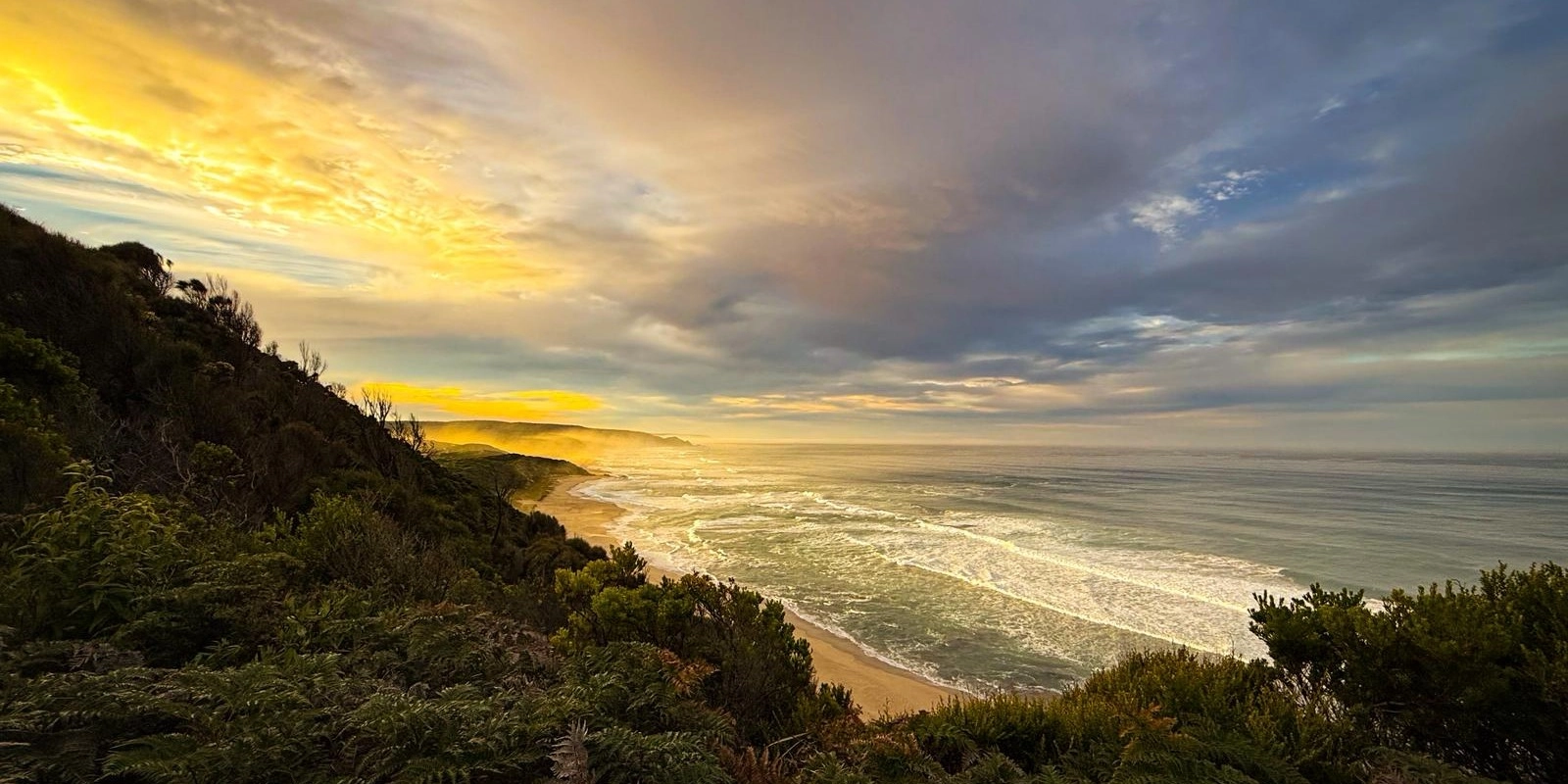
We’re lucky here in Victoria because our backyard includes some of the most breathtaking scenery in Australia, and you don’t need to be an experienced adventurer to enjoy it. The diverse hiking regions in Victoria offer something for everyone, from those who are discovering a new hobby to those who want to push themselves and achieve something incredible.
However, with so many trails, parks, and regions to choose from, knowing where to start can feel overwhelming. So we are here to help you choose something suitable to your experience and what you want to get out of your adventure.
We’re going to (digitally) explore six of Victoria’s most iconic hiking areas that every hiker needs to try at some point in their life. You’ll discover two easy options perfect for beginners, two moderate trails for those ready to level up, and two hard hikes for when you’re chasing a bigger adventure. We’ll also cover how trail difficulty is rated and how to match yourself to the right track before you head out. Let’s get into it.
Victorian hiking grades and what they mean
If you’ve ever searched for a Victorian hiking trail and found conflicting difficulty labels across different websites, you’re not alone. Parks Victoria, local councils, and private operators each use their own rating scales, which makes comparing trails tricky, especially if you’re newer to hiking.
To keep things consistent, this guide draws on established trail rating principles and rates each area across total distance, cumulative elevation gain, and terrain technicality (surface type, exposure, and navigation complexity). That combination gives a much clearer picture of what a trail demands.
Here’s how the three tiers break down:
- Easy: Suitable for beginners, minimal elevation gain, well-marked paths with stable surfaces
- Moderate: Requires a reasonable base fitness level, some elevation, and mixed terrain underfoot
- Hard: Demands strong fitness, significant ascent, and sections that may be exposed or technically demanding
Knowing which category a trail fits into will help you self-assess before you commit. Although many people tend to under-estimate themselves, it is possible to go too hard too soon and this is a common reason hikers have a rough experience and lose confidence. If you want a broader starting point, our guide to the best hikes near Melbourne for every fitness level is a useful companion to this one.
Remember: all ratings here reflect fair weather conditions. Winter cold, alpine wind, or heavy rainfall can make any trail more challenging, particularly in elevated areas. Always check conditions before you head out.
Easy: Dandenong Ranges National Park
If you’re looking for your very first trail in Victoria, the Dandenong Ranges are hard to beat. An easy drive east of Melbourne CBD, they put classic forest hiking within easy reach of the city.
The standout route here is the Kokoda Track Memorial Walk, a multi-kilometre return trail winding through tall mountain ash and dense tree ferns. Well-maintained paths, clear signage, and manageable gradients throughout mean you can spend your energy actually enjoying the forest rather than worrying about where to put your feet. It’s worth having an extra search because the Dandenongs have some smaller, steeper trails winding between the more major trails that could increase the difficulty.
Overall, the advantage for beginners is that it shifts your focus from exertion to experience. The dense forest creates a naturally immersive environment that rewards attentive walking, making you feel far away from civilisation. If you’ve ever read about the science-backed mental health benefits of getting out on the trails, this is exactly the kind of setting those benefits are found in.
Practical notes:
- Parking is available at multiple trailheads across the park
- Public transport from Melbourne runs to the area, making it accessible without a car
- Trails are open year-round with minimal weather-related closure risk
Easy: Great Otway National Park
If you’d rather explore coastline and waterfalls as you get into hiking, the Great Otway National Park is where you need to go.
Stretching along Victoria’s south-west coast near the Great Ocean Road, Great Otway National Park shifts between rainforest, coast, clifftops, and open fields in a way that keeps easy walks interesting. The variety means you can cover short distances and still feel like you’ve experienced something substantial.
Mait’s Rest Rainforest Walk is the standout starter. A short, accessible boardwalk loop, it winds through a rare surviving stand of temperate rainforest with ancient trees all around you. Very little effort is needed, with solid footing underneath you and no elevation.
Erskine Falls circuit, near the coastal town of Lorne, can pair well with Mait’s Rest to lengthen your day with a waterfall destination on a gently graded short loop. Elevation is minimal, the path is well-maintained, and the falls make a satisfying end point.
For groups wanting a social, scenic experience, coastal sections of the Surf Coast Walking Track deliver sweeping ocean views on easy-to-moderate terrain that allows for easily flowing conversation.
Practical notes: If you want to extend the trip, accommodation ranges from park campgrounds to Lorne holiday rentals. Spring is worth timing your visit around, when wildflowers add colour through the forest trails.
Moderate: Yarra Ranges National Park
Located approximately 100 kilometres north-east of Melbourne, this park is home to mountain ash trees of extraordinary height, making them among the tallest flowering trees on Earth. It’s hard to explain how it feels to walk amongst them, you’ll just need to go there!
The go-to moderate walk here is the Rainforest Gallery and Ada Tree circuit, which passes through cool temperate rainforest and fern-lined creek flats. The gradient changes are steady but manageable, making it an excellent first step up from easy terrain.
For hikers ready to push further, Cathedral Range State Park sits on the edge of the Yarra Ranges and delivers ridge walks with solid elevation gain and panoramic views. Expect a sustained half-day of effort and maybe some satisfying muscle aches the next day.
The Yarra Ranges creates an immersive environment that you can only get from venturing further out and stepping up the challenge. If you want to understand what that experience feels like closer to Melbourne, our Complete Guide to Hiking the Main Yarra Trail is a great starting point.
Practical notes: The area is well-signposted, trail maps are available through Parks Victoria, and nearby townships offer options for a meal before or after your walk.
Moderate: Kinglake National Park
Within easy reach of Melbourne in the foothills of the Great Dividing Range, Kinglake National Park is one of the most accessible moderate hiking options for city-based hikers wanting a half-day or full-day experience without a long drive.
The signature walk is the Mason Falls and Jehosaphat Gully circuit, with moderate elevation changes. The trail features a great view of the waterfall alongside eucalypt forest that has been steadily regenerating since the 2009 Black Saturday bushfires. The visible recovery of the bush is striking, and many hikers find the landscape a great place for some reflection and appreciation for nature.
Kinglake also works exceptionally well for first-time group hikers. The trail width and natural pacing rhythm create easy opportunities for conversation and connection, which makes it a strong entry point for anyone new to hiking with others. If you’re curious about what group hiking actually feels like, you can check out our Calendar of adventures to discover the benefits for yourself (we go to Masons Falls for one of our short hikes)!
Practical notes: Access the park via Kinglake township. Check Parks Victoria for current trailhead facilities. Visit after rainfall for the best experience, as Mason Falls flows most impressively when the catchment is wet.
Hard: Mount Buller and the Alpine Region
Sitting at 1,805 metres in the Victorian High Country, Mount Buller is where Victorian hiking takes you to the next level. Buller is best experienced as a hiking destination in summer and autumn, once snow clears. The summit walk from the village to the peak is a solid day’s effort with prominent elevation gain and exposed sections of ridgeline require solid footwear, steady footing, and basic awareness of where you’re headed.
Beyond the summit, connections into the Alpine National Park open the door to multi-day adventures along the Australian Alps Walking Track, one of Australia’s great long-distance routes. If you’re keen on alpine hiking outside of Victoria, our Complete Guide to the Mount Kosciuszko Hike is well worth your time on your way to reaching the highest peak on mainland Australia.
Weather is the variable that needs the most consideration. Conditions in the Victorian Alps can turn without warning, even in summer. Mists, high winds and dropping temperatures can increase difficulty within minutes so it’s important to have layered clothing, a navigation tool, and a well-prepared group in this region.
What many hikers find, though, is that the difficulty is the highlight. Reaching that summit and putting in the effort delivers a level of confidence that’s hard to create on easier terrain. For many people, it’s the walk that changes what they believe they’re capable of.
Hard: Wilsons Promontory National Park
Fondly known as “The Prom,” Wilsons Promontory sits at the south-eastern edge of mainland Australia. With an extensive network of marked trails crossing granite headlands, coastal greenery, and dense forest, it earns its reputation as Victoria’s most celebrated hiking park.
If you’re looking for a multi-day challenge, the Lighthouse Walk to South Point is the park’s definitive hard route: a return route typically completed over two to three days, with sustained elevation changes, exposed granite underfoot, and remote overnight camping at Roaring Meg or the lighthouse precinct. There are considerations beyond fitness here, including navigation, water management, and physical pacing.
If multi-day logistics feel like too much too soon, the Mount Oberon summit trail offers a hard single-day option with significant elevation gain on a consistently steep track, delivering 360-degree coastal views and a cardio workout without requiring overnight gear.
Practical notes: Overnight permits are required for multi-day routes; check Parks Victoria’s booking system well in advance as availability is limited, particularly in summer. The Prom is a dedicated drive from Melbourne, making it a great spot for a multi-day trip.
Which trail is right for you?
Now that we have some great options, we need to choose the right one for where you are right now.
Start with an honest self-assessment across three dimensions:
- Cardiovascular fitness: Can you sustain 60 to 90 minutes of brisk walking without stopping to recover?
- Leg strength: How do your knees and ankles handle uneven ground, repeated descents or loose rock?
- Trail experience: Have you navigated using a map or GPX track before, or do you rely on clear signage throughout?
If any answer gives you pause, consider an easy or moderate hike . Starting below your instinct on a first visit builds familiarity with local terrain, conditions, and pacing before committing to something more demanding.
On the gear side, your most important considerations are footwear and layering. Trail runners or low-cut hiking shoes handle easy and moderate Victorian terrain well. Once you move onto rocky ridgelines and headlands, ankle support becomes important. Layering matters equally in elevated areas where conditions shift quickly.
Hiking with others will improve your safety on moderate and hard routes by spreading navigation responsibility, first aid knowledge, and emergency resources across the group. This is why guided group experiences are especially valuable when stepping up in difficulty, and why taking on a demanding trail is generally approached with experienced support.
Take Shape Adventures’ guided Victorian day hikes and multi-day trips are built around these exact difficulty tiers, offering expert route knowledge and a ready-made community for your first, or most ambitious, Victorian adventure.
Time to find your next Victorian adventure
Victoria’s hiking landscape covers every level. Beginners can find a great day out in the forested Dandenong Ranges and Great Otway for easy entry. Those ready to step it up will enjoy the rewarding full-day trails in the Yarra Ranges and Kinglake, and hikers wanting a challenge can find it in the alpine and coastal terrains at Mount Buller and Wilsons Promontory, respectively.
The key is picking your tier responsibly and checking conditions before you go.
Beyond the trail and the physical effort, each of these areas offers something extra, like a shift in perspective, a moment to reflect, a connection to the landscape, or a shared experience with other people that leaves you feeling energised for the rest of the day (or week or month).
If you’re ready to step outside and explore, Take Shape Adventures’ Victorian guided hike calendar shows upcoming day hikes and multi-day trips matched to each difficulty tier covered here. It’s a practical way to find your first, or next, great Victorian adventure.