

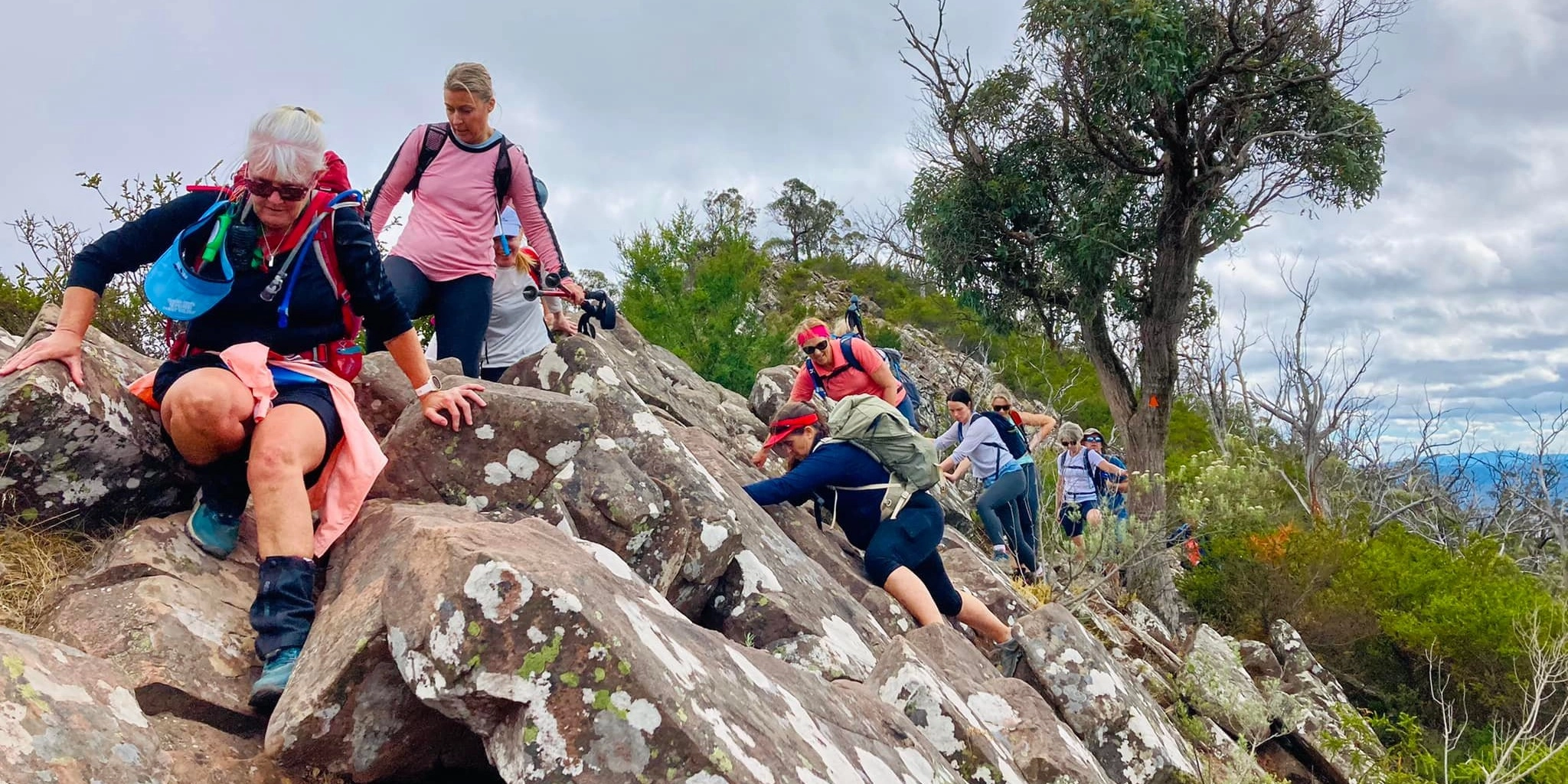
I think every hiker knows the enticing rabbit-hole of outdoor adventure gear. You start by walking a few trails, get hooked on hiking, and find your eyes drifting toward gear guides, YouTube reviews, Facebook Marketplace and displays in Kathmandu that look just so cool.
To enjoy hiking, even at moderate or challenging levels, you don’t need to spend a fortune, Comfortable activewear, a decent pair of runners, and a water bottle will carry you through a good portion of casual day walks. However, once you start tackling longer trails or heading into more remote terrain, having the right hiking gear begins to become important. Better footwear, a smarter pack, and a few well-chosen extras can be the difference between a tough slog and a great day out.
In this blog, I’ll walk you through the upgrades worth considering when you’re ready to take things up a notch. These are all beginner-friendly items that, from my experience, make a difference and are built around the simple idea of bring what you need and make sure it works.
No need to spend big
If you’re heading out in activewear, trail runners and with a drink bottle, you’re doing it right. Australian hiking experts agree that heavy boots and specialist gear aren’t necessary when you’re starting out, but the hiking industry doesn’t always make this obvious. Walk into any outdoor retailer or scroll through gear forums and it can feel like you need hundreds of dollars of gear before you’re allowed on a trail. You don’t.
So when does upgrading make sense? When your dream hikes start asking more of you and your gear. This includes longer hikes, multi-day trips, alpine terrain, remote bush tracks, or early starts in unpredictable weather. Consider these upgrades as helpful tools that allow you to say yes to bigger adventures and remember that you don’t need to buy everything at once!
Shoes that fit feet and terrain
Footwear is often the first upgrade that changes your experience on trail. Basic runners are fine up to a point, but once you’re covering 15km+ on rocky tracks, crossing rivers or heading down very steep declines, the limitations reveal themselves. Hot spots, blisters, and slipping on wet rock are common and can lead to a less pleasant hike at best, or a further injury at worst.
When shopping for trail-specific shoes, look for three things:
- A grip pattern deep enough to handle leaf litter and loose surfaces common in Australian bush
- A wider toe box so your feet can spread naturally over long days
- Enough lateral support for uneven ground.
Good grip, general comfort, and blister prevention are standard across hiking shoes, so really get into those three specifics. Australian conditions add extra considerations. For example, breathable mesh uppers are great in Summer or you may want more grip when going somewhere like Victoria’s high country as opposed to a coastal walk.
The best tips I have for you before buying a pair of shoes is to try them on in the afternoon when your feet are slightly swollen, wear the same socks you plan to hike in, and break them in on shorter outings before a big day.
A quality pair of trail shoes, cared for reasonably well, will last several years and is one of the better long-term investments on this list.
Pack more, worry less!
A regular backpack works fine for short walks, but longer walks with more weight make these kinds of bags very inconvenient. Purpose-built hiking packs redistribute weight through a hip belt, shifting the load off your shoulders and onto your hips. Back ventilation panels create airflow between the pack and your spine, useful in Australian summer heat where a solid foam panel would otherwise leave you soaked.
If you’re regularly packing more than a water bottle (i.e. layers, lunch, a first aid kit, sunscreen), you’re consistently uncomfortable with your back sweat, or you’re planning any hike over six hours, a proper hiking pack is worth it.
Features worth prioritising:
- A back ventilation panel for heat management
- A hip belt that transfers weight off your shoulders
- A hydration sleeve or external bottle pockets
- Water-resistant materials or an included rain cover
A hiking pack sized for a full day hike is all you need; save larger packs for multi-day trips if that’s your next step. The Osprey Hikelite 26 is a solid entry-level benchmark at 26 litres. That being said, fit matters more than brand. Most outdoor retailers in Australia offer in-person pack fitting, which is worth doing before you buy.
Your hiking clothes are a team
What you wear matters as much as what you carry. The general approach used by most hikers involves three layers:
- Base layer: sits against your skin and moves sweat away
- Mid layer: a fleece or light insulating jacket that traps warmth
- Outer layer: a packable shell that blocks wind and rain
Together they weigh very little and easily stuff into your pack. The advantage they provide is flexibility when conditions change mid-hike (as they always do), so you can remove or add layers as needed. For most Australian summer hiking, a moisture-wicking base layer and a packable wind shell is enough. Add a lightweight fleece for colder seasons or areas where conditions can change rapidly, such as gaining elevation. My advice is to start with a packable rain shell since Australian weather can turn quickly, then build from there.
One thing to avoid is fabrics that lose insulation when wet. Merino wool and synthetics manage sweat far better and are worth the small price difference.
If you’re unsure what your clothing gaps are, a guided trip is a useful way to find out. Participants on our hikes often discover which layer they wished they’d packed, making it a practical testing ground before spending anything and embarking on less supported hikes.
No hiking guide? You’ll need to use your gear
On popular, well-marked trails in national parks, your phone and a free app like AllTrails will do fine for navigation. When you find yourself in more remote areas with no phone signal, here are a few things worth trying.
Start with the simplest fix. Offline mapping apps (like the paid version of AllTrails) let you download maps before you leave home, so you’re not dependent on mobile data.
The next step up is a mapping watch. The Garmin Fenix 8 loads full topographic maps on your wrist, runs for 56 to 78 hours in activity mode, and means you’re not burning phone battery every time you check your position. This is worth considering if you regularly tackle technical or remote terrain.
For remote areas, navigation and safety are two separate things. A mapping app helps you find your way. A satellite communicator like the Garmin inReach Mini 3+ helps others find you if something goes wrong. It operates outside Australian mobile networks, with global coverage and emergency SOS capability. Most hikers never touch the SOS button, but carrying one removes a layer of risk when you’re deep in the bush with no bars on your phone.
Add poles to your packlist
Most newer hikers look at hiking poles and think: do I need those? You don’t need them for every hike, but once the terrain gets serious, they become one of the most useful pieces of kit you can own.
The core benefit is load redistribution. On steep descents, poles reduce the compression force on your knees by transferring some of that impact through your arms. You’ll feel the impact most on hikes with significant elevation change, on multi-day trips where fatigue builds across days, or for anyone with existing knee or joint sensitivity.
What to look for in a first pair:
- Collapsible or foldable design so you can stow them in your pack when the track is easy
- Cork or foam grips over rubber; they manage moisture better on sweaty hands
- Adjustable length so you can shorten them on the way up and lengthen them on descents
Technique takes a few walks to feel natural. Most people find the first walk or two awkward, then never want to hike without them.
Slip, slop, slap… and sip!
While a standard drink bottle is fine for a 2-hour walk, you’ll need something more for a full day of walking.
A water bladder fits inside most daypacks and holds enough water for a full day, with a drinking tube that clips to your shoulder strap. Because you can sip without stopping, you drink more consistently and avoid those annoying niggly headaches.
On longer hikes in warm weather, consider whether water alone is sufficient. A small tube of electrolyte tablets or powder weighs almost nothing and dissolves into your water bottle or bladder. Being cheap, effective and lightweight makes this one an absolute winner.
Sun protection is non-negotiable in Australia, particularly on exposed ridgelines and coastal tracks. A broad-brimmed hat (not a cap, which leaves your neck and ears unprotected) combined with a sun-protective shirt will reduce your sun exposure. The sun shirt is multi-functional as it provides UV protection on open terrain and a breathable base layer when temperatures drop.
First aid designed for you
Most off-the-shelf first aid kits are packed with items you don’t need and missing things you do. Build your own instead.
The essentials for Australian bush hiking:
- Hydrocolloid blister dressings (far more effective than standard plasters on wet or sweaty skin)
- Two compression bandages for sprains and snake bite management
- Antiseptic wipes and wound closure strips for cuts and abrasions
- A mylar emergency blanket, which packs down small and weighs almost nothing
Add a small medications card listing any prescription items, your antihistamine for unexpected allergic reactions, and basic pain relief. The whole kit fits in a zip-lock bag and weighs next to nothing.
A half-day wilderness first aid course will serve you better than any item on this list. If you want a trail to practise your preparedness before committing to remote terrain, places like the Dandenongs, Otways or You Yangs provide varied walking conditions without being too far from civilisation.
No need to buy everything at once
To reiterate, the upgrades in this post are chosen to expand your adventure horizons, not to replace gear that is already working fine for you.
A sensible upgrade sequence:
- Footwear and a daypack first. These affect every single hike, so they’re worth the investment upfront
- Rain shell and basic first aid next. Both are lightweight, relatively low-cost, and are the most common gaps
- Navigation tools as terrain gets more remote. You won’t need them on a well-marked track
- Trekking poles last, if descents start bothering your knees or technical terrain becomes a regular thing
On budget: footwear and a pack are worth spending more on, as they will last you years. Most other items, electrolyte tablets, a first aid kit, a rain shell, sit at the affordable end.
Take Shape Adventures’ guided day hikes and multi-day trips are a practical way to see what other hikers carry, ask questions of other hikers and guides, and notice what you personally felt was missing, which can provide a useful reference point before spending anything.
Having the right gear is an opportunity
Adding the right pieces of gear as you need them makes longer distances, remote terrain, and multi-day adventures more enjoyable and safer. A practical starting point is to identify the next hike that feels just slightly beyond your current comfort zone and ask, which one or two items would make this more achievable? Start there.
If you’re not sure what that hike looks like yet, that’s exactly where Take Shape Adventures can help. Our guided day hikes and multi-day trips are a low-pressure way to test your gear on various terrain, see what others carry, and find your footing alongside a community of hikers at a similar stage of the journey.
The gear worth prioritising is straightforward: footwear suited to your terrain, a pack that fits properly, clothing that works as a layered system, and navigation tools you know how to use. Everything else follows from there.
Start where you are, upgrade intentionally and let your ambition tell you what comes next.