

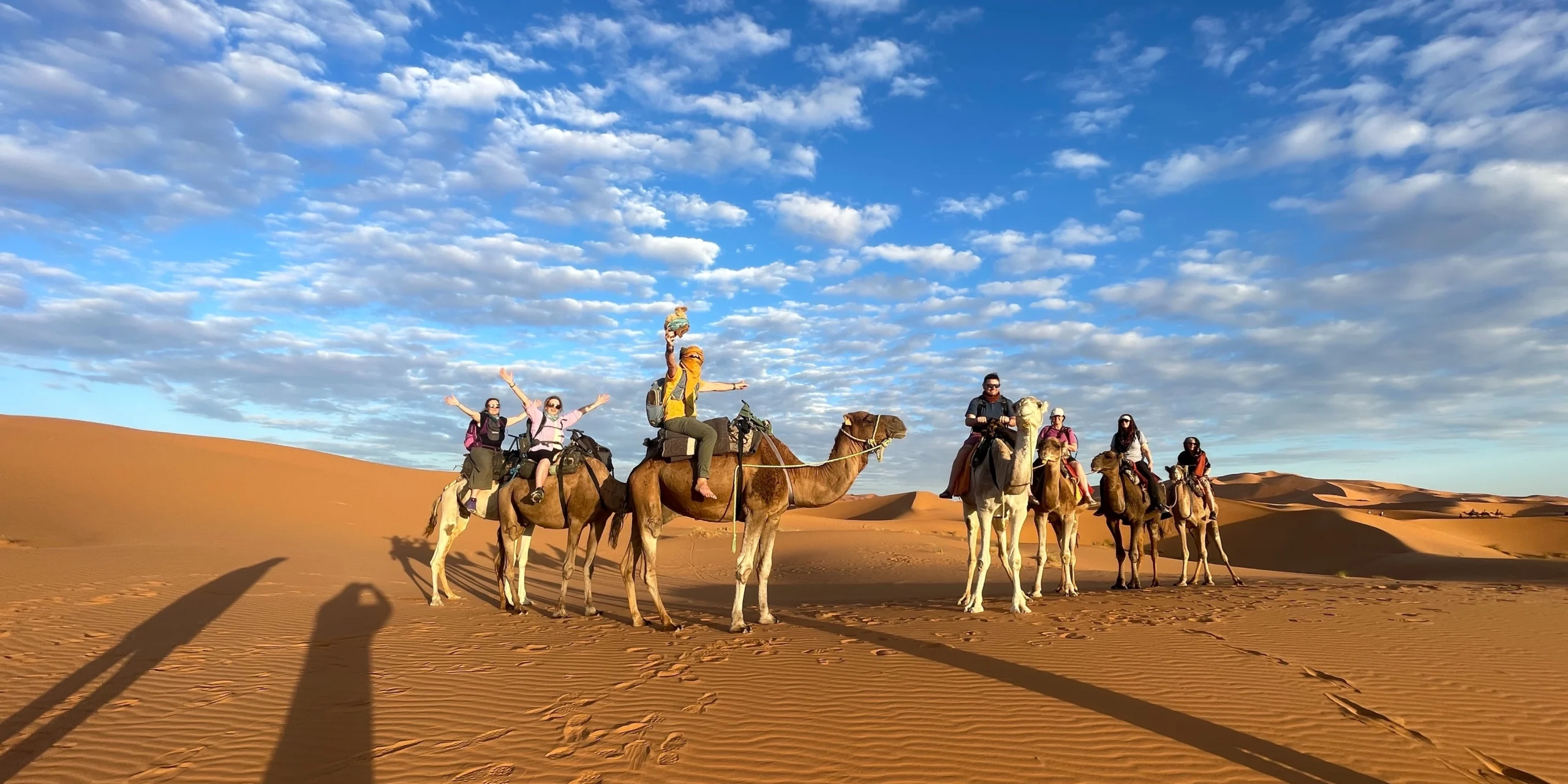
Social media and movies can convince many people that “adventure” means jumping out of a plane or hiking through a remote place for weeks on end. The downside of this is that it holds people back from adventure because people instantly think, “I can’t do that” or “I’m not fit, fast or strong enough”.
The truth is, adventure is far more accessible than the highlight reels on social media would have you believe and any level of adventure can be transformative. It doesn’t matter if you’re a complete beginner or are questioning if an international trip is right for you, there’s a version of adventure that fits your life, fitness level and budget.
In this blog, you’ll discover why your assumptions about adventure might be holding you back, how to find a style that suits you, and why places like Victoria are hiding some underrated experiences. We’ll also cover the wellness side of adventure, sustainable travel, solo travel trips, guided experiences and so much more.
By the end, you’ll have a clear, practical sense of where your next adventure could take you. It’s probably closer than you think.
Adventure isn’t what you think it is
Most people hear the word “adventure” and imagine a months-long hike where you sleep out in the open and eat nothing but dehydrated food. The unfortunate thing about this stereotype is that it convinces ordinary people adventure isn’t for them.
The Adventure Travel Trade Association defines adventure more broadly: any experience combining physical activity, natural environments and cultural exchange counts. That definition puts a local hike through the Dandenong Ranges on equal footing with trekking in Nepal. On a more metaphorical level, adventure is simply stepping outside a familiar routine and accepting a degree of uncertainty. The destination (or even the activity) matters less than the willingness to show up for something new.
Australian domestic tourism research consistently shows that meaningful outdoor experiences rank among the strongest drivers of travel satisfaction. If you’ve ever wondered why flopping on a beach resort in Bali doesn’t leave you feeling very refreshed, you may have forgotten to include those meaningful experiences.
If you want to understand what an adventure experience can look like in practice, the range is wider than you might expect. The most important thing to remember is that if you’re waiting until you’re fit or experienced enough, you’ll wait forever. Adventure is personal, so it can meet you wherever you are right now.
What makes the perfect first adventure?
Now that we know adventure can be personal and accessible, the obvious next question is where do you start?
I will always recommend a day hike. You’ll get all the meaningful parts of an adventure, such as a physical challenge that suits you, immersion in a natural environment, and the satisfaction of finishing something that felt scary at the beginning.
Living in Victoria makes this easy. With roughly 8,000 kilometres of trails across the state, beginner hikers can find coastal walks, forests and mountains within a few hours of Melbourne. You can cover vastly different landscapes and difficulty levels without leaving the state.
The two things that stop most beginners are route-finding anxiety and the what-do-I-even-pack? paralysis that keeps people planning indefinitely instead of going. The best way to get past both of these barriers is by going on a guided hike with an experienced group. You can find your ideal Day Hike with Take Shape Adventures, where we run Victorian day hikes built specifically for people at the start of their outdoor journey.
It is also a low-stakes way to test your appetite. The in-person experience of heading on a day hike will tell you more about your level than hours of research.
What you can learn from a longer adventure
The difference between a single-day hike and a multi-day hike is qualitative, not just physical. Consecutive days in nature strip away everyday noise and create a mental spaciousness that is hard to find any other way.
A longer experience in nature builds what researchers call earned self-efficacy, which is the confidence that can come from adapting to unfamiliar and challenging experiences. The science behind why hiking transforms wellbeing supports this, and outdoor education research confirms that self-efficacy gains from extended outdoor programs transfer meaningfully into everyday life.
Sharing a multi-day adventure with other people is also one of the fastest and most effective ways to develop invaluable social connection. When you all share meals at a campfire and spend hours chatting on the trail, you build trust faster than almost any other social setting.
Beginners are often intimidated by the scale of logistics and gear that needs coordinating for a longer adventure, but a professionally guided trip provides clear packing lists, experienced guides and carefully chosen campsites to take the guesswork out of it. At Take Shape Adventures, we build this into our multi-day trips, with thoughtfully curated comfort that makes the leap from day hikes to multi-day adventures feel achievable.
Discover the wellness side of adventure
What if your adventure restored you, even while it makes your legs sore? Global travel research for 2026 confirms more travellers are seeking experiences combining movement with intentional recovery, with nature-led accommodation and fitness holidays emerging as strong drivers of demand.
Yoga and hiking are a particularly natural pairing. Hiking builds endurance and gives you a chance to challenge yourself in nature. Yoga restores mobility, settles the nervous system and gives you a space for reflection. Each practice makes the other more effective.
Unfortunately, there are plenty of services hitting either wellness or adventure, but not both. Traditional spa retreats offer rest without challenge. Standard adventure tours offer challenge without recovery. Wellness retreats that include outdoor adventure address both.
Take Shape Adventures offers yoga, hiking, and wellness retreats in Australia and Vietnam, designed for people who want to restore themselves and switch off in the outdoors. If outdoor adventure has ever felt too physical, or hiking has felt incomplete without recovery built in, this integrated model is a accessible entry point.
Solo travel is great. Social connection is better
It’s easy to see why solo travel is so appealing. You can head out on your own terms, not have to worry about wrangling other people and enjoy an experience where you’re alone but not lonely.
However, with around 1-in-3 Australians experiencing loneliness and isolation, a guided group adventure may be what more people need at the moment. Having a shared experience, especially one with challenge, naturally creates an instant common ground. Shared physical challenge accelerates trust in ways that ordinary social settings do not because it puts you in scenarios where you actually need to trust others. Feeling uncertain together and supporting each other through tough moments is a surefire way to develop connection.
Take Shape Adventures builds community into our outdoor experiences by design. Our trips attract mostly solo travellers, with some pairs of friends or couples, who leave with both a great experience under their belt and a new group of people who share their values. That’s a different outcome to most travel experiences where you’re either on your own or with people you already know.
If the tricky task of organising a group of people has been holding you back, a community-focused guided trip is a practical solution you may want to consider. Based on my experiences in 10+ years of running outdoor adventures, the connections formed with strangers on a trail often run deeper than those with people you already know.
Your adventures can help or harm the planet
Equally as important as the group you travel with is the impacts of your travel. Adventuring in a sustainable manner has gone through many phases, with the Adventure Travel Trade Association (ATTA) maintaining a dedicated Sustainability Resource Center and a Sustainability Commitment framework that sets a clear industry standard.
These guidelines are imperative because adventure takes you to sensitive places like alpine areas, forests and coasts that cannot absorb unlimited foot traffic without lasting damage. Protecting them and engaging with them responsibly is the only way we continue to experience them for decades to come.
Responsible tour operators do this through practical choices like managing group sizes, following Leave No Trace principles, partnering with local communities and routing itineraries away from over-visited sites. If you’re choosing a guide or operator, visible sustainability commitments are one of the clearest signals that they’re worth your trust.
A great way to stay more sustainable, especially for beginners who are a bit nervous about venturing out into the world, is by exploring Australia first. Domestic adventure travel carries a significantly lower carbon footprint than international trips and we are very lucky here in Australia with the variety of landscapes available for us to explore. Victoria alone offers alpine regions, ancient rainforests and expansive coastlines, all without boarding a long-haul flight.
Explore your backyard first
Speaking of landscapes worth protecting, Victoria punches well above its weight when it comes to having many adventures within a relatively small area. Our state gives you the snowy alpine terrain of the High Country, rainforest in the Otways, volcanic plains in the Grampians, and coastal cliffs along the Great Ocean Walk. It’s rare to find that kind of range anywhere in the world.
If you’re based in Melbourne, the geography works strongly in your favour. Most of Victoria’s major trail networks sit within a two-to-three hour drive of the CBD. In a single day, you can head into nature, feel immersed and be home in time for dinner.
The range of trails available is equally useful for beginners. Flat riverside walks, like the Yarra Trails for example, offer a gentle entry point, while technical ridges in places like the Cathedral Ranges are there for when your confidence grows. Tourism Research Australia’s local government area profiles confirm that regional Victorian destinations draw strong domestic visitor numbers consistently, and the combination of accessibility and landscape quality makes the state competitive with adventure destinations even outside Australia.
At Take Shape Adventures, we’ve run Victorian adventures for 10+ years are we’re still discovering new places to explore, or just loving the same trails over and over again. We bring local knowledge around trail selection, seasonal timing, and route conditions that a generic national operator cannot replicate. If you are ever curious about adventures beyond the state, that option exists too.
Which adventure style is right for you?
Your adventure style is shaped by three factors: your current fitness level, your risk tolerance and the reward you are seeking. That reward might be physical achievement, social connection, immersion in a landscape, a space for personal reflection or something else. Remember they are all equally valid reasons.
A practical starting question is whether you want comfort or challenge to be the dominant note of your trip.
- If you want challenge but feel nervous about fitness, start with a graded day hike and notice how you feel at the summit. Most people find their threshold is considerably higher than they assumed, and that discovery is fantastic for boosting confidence for bigger adventures.
- If social connection is your primary motivation, look for groups who build community into the design of their trips.
- If restoration is what you need, a retreat combining wellness and adventure or a multi-day trip with intentional downtime will serve you far better than a high-intensity program.
ATTA research into adventure traveller motivations finds that most people who consider themselves “non-adventurous” are strongly motivated by the outcomes adventure produces. They just don’t realise that adventure is the way to go about finding these outcomes.
Do you need guided or self-guided adventure?
Once you know your adventure style, the next question is whether you want to navigate that experience yourself or with a guide.
Self-guided adventure gives you complete flexibility and a sense of ownership. Choosing your own route, managing your own decisions, and solving problems as they arise produces a particular kind of satisfaction that is hard to replicate.
Guided adventure may be more suited to beginners, people who are a bit unsure, or those who just don’t have the headspace to organise people and details (many people, I think). A good guide brings local knowledge you can’t Google, handles safety and logistics, and creates a social environment for their group. This means your mental energy stays present on the trail and with other people, rather than the map.
So consider your experience level, confidence, where you’re at in life and where you want your attention to go during the trip when choosing between guided and self-guided. Many people find the most useful path is to start guided so you can learn the terrain, build skills, and gain enough confidence to eventually return to the same landscape on your own. You don’t have to stick with guided adventure forever, it is simply the smarter starting point for plenty of people.
Feel the uncertainty and go anyway
Whatever path you take when starting and developing your life of adventure, the most important thing you can do is just go. Adventure is personal. It’s not defined by distance, elevation, or an “official” difficulty rating. If you want to spend just a few hours away from screens actually listening to your thoughts on a gentle trail, that’s adventure. If you want to make lifelong friends climbing mountains in another country, that’s adventure too. What matters is that it stretches you in a way that feels meaningful to you.
Here’s how you’re going to make it happen:
- Pick your style. One day vs a weekend vs a week? Guided or self-guided? On your own or with a group? A big physical challenge or something more restorative? Your gut is probably leaning towards some of those options, so start there.
- Locking in a date is the best thing you can do. Find a trail or check out the Take Shape Adventures calendar to find a hike that matches where you are right now, and put it in your calendar. It’s amazing how having a date locked in is so good for accountability.
- If finding people feels hard, let the group come to you. A guided group experience includes the social experience from the very beginning. All you need to do is show up with no pre-planning.
Take Shape Adventures runs day hikes, multi-day trips, and wellness retreats across Victoria and beyond, all designed for people at every starting point. If you’re ready to stop thinking and start doing, having a look at our calendar is a great way to begin.
It’s time to finally do it!
Adventure is not a fixed destination or a standard someone else sets. It is personal, scalable, and far more accessible than most people assume. Ultimately, the best adventure is the one that suits you, and living in Victoria makes life easy with plenty of landscapes to explore and communities ready to make your life easier.
You don’t need to wait until you’re fitter, braver or better prepared. You need to pick a date, a trail and just have a willingness to show up. Whether you’re brand new to adventure or are ready to push further, there’s a trip that meets you where you are.
Stop reading about adventure. Go find yours.