

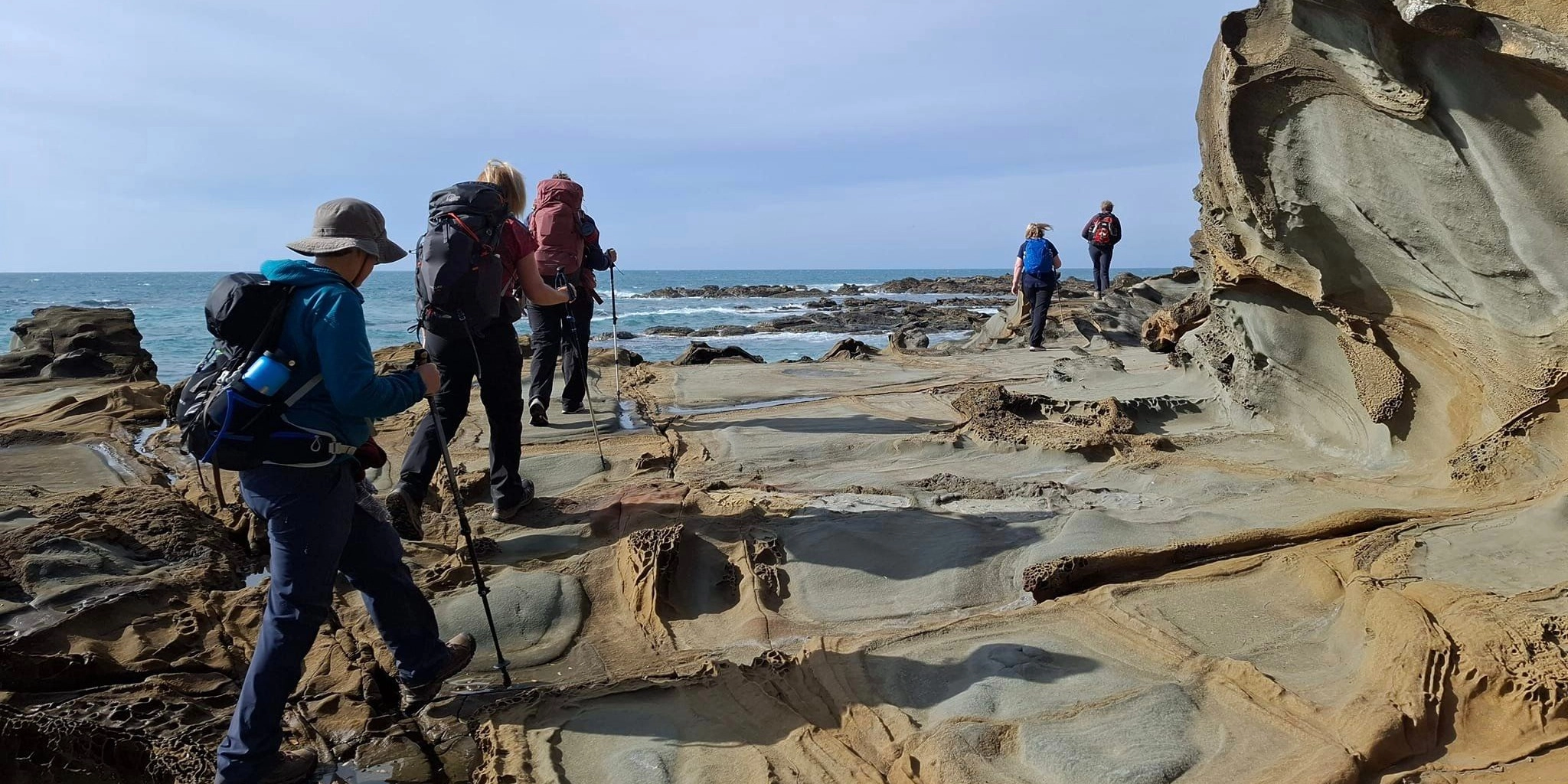
Imagine standing on a rugged cliff edge, breathing in fresh Southern Ocean air, with nothing but dramatic coastline stretching out as far as the eye can see. That is exactly what awaits you on the Great Ocean Road hike, one of Australia’s most spectacular multi-day walking experiences.
Stretching approximately 105km along Victoria’s iconic coastline, the Great Ocean Walk takes you from the charming town of Apollo Bay all the way to the jaw-dropping Twelve Apostles across seven incredible days. And here is the best part: you do not need to be an experienced hiker to tackle it. Classified as Grade 3 under the Australian Walking Track Grading System, it is considered achievable for most people and suitable for most ages and fitness levels. Hikers as young as 10 and as seasoned as 82 have completed this trail.
In this guide, we will walk you through everything you need to know before lacing up your boots. From how to get there and what terrain to expect, to the best campsites, what to pack, and the incredible wildlife and scenery along the way. Let’s get into it.
What Is the Great Ocean Walk?
The Great Ocean Walk is a 104km point-to-point trail running from Apollo Bay to the Twelve Apostles along Victoria’s southwest coast. Managed by the Great Ocean Road Authority, the entire route sits within Great Otway National Park.
The trail is graded Grade 3 under the Australian Walking Track Grading System, which means it’s achievable for most people at most fitness levels. That’s not marketing spin; guided tour participants have ranged in age from 10 to 82 years old. There are short steep climbs, rough surfaces, and plenty of steps, so some base fitness helps, but this isn’t a trail reserved for experienced bushwalkers. If you’re exploring Victoria’s best bush walks for your skill level, the Great Ocean Walk sits comfortably in the accessible-but-rewarding category.
The walk is structured as a seven-day journey across designated daily stages, with maximum distances of up to 20km per day. That pacing gives you time to actually absorb the scenery rather than simply survive each stage.
One thing to understand before you start planning: this is a one-way, point-to-point trail, not a loop. You begin at Apollo Bay and finish at the Twelve Apostles, roughly 285km from where you started. Getting yourself (and your car) between those two points requires some upfront logistics, which we’ll cover in the next section.
What makes the route genuinely special is the variety packed into a single week. Exposed clifftops, sheltered rainforest gullies, sweeping surf beaches, and the iconic limestone stacks of the Twelve Apostles all feature on the same trail. Very few walks in Australia deliver that range of landscapes in seven consecutive days.
How to Get to Apollo Bay and Back from the Twelve Apostles
Because the Great Ocean Walk is point-to-point, sorting your transport before you leave home is just as important as packing the right gear.
Getting to Apollo Bay
The trailhead starts in Apollo Bay, around 190km southwest of Melbourne. By car via the Great Ocean Road, expect roughly 2.5 to 3 hours depending on stops. If you’re coming without a vehicle, V/Line operates a coach service from Melbourne’s Southern Cross Station directly to Apollo Bay, making it a viable option for those travelling solo or without a car.
Getting Back from the Twelve Apostles
The trail finishes near Port Campbell, approximately 285km from Melbourne. Since you won’t end up where you started, you’ll need a plan for the return leg. Your main options are:
- Hiker shuttle services run specifically between Apollo Bay and the Twelve Apostles, letting you park at one end and be dropped at the other before you begin
- Two-car groups can leave one vehicle at the Twelve Apostles Visitor Centre car park, then drive together to Apollo Bay to start
- Coach back toward Melbourne via Warrnambool, or a hire car from the Twelve Apostles end
The two-car method is popular and costs nothing extra, but it requires a second driver willing to make the trip back to collect the car at the end.
If the logistics feel like too much of a puzzle before you’ve even laced up your boots, it’s worth exploring guided hikes departing from Melbourne as a starting point. Operators like Take Shape Adventures handle all transfers as part of the experience, so you simply show up and walk.
Day-by-Day Stage Breakdown
Once your transport is sorted, it helps to know what each day actually looks like on the ground. Here is how the 105km unfolds across seven stages.
Day 1: Apollo Bay to Shelly Beach The trail eases you in gently. You leave Apollo Bay and almost immediately the Southern Ocean opens up beside you, giving you an early sense of why people walk this route. A manageable introduction to coastal terrain, perfect for settling into your pack and your pace.
Day 2: Shelly Beach to Parker Inlet You move deeper into Great Otway National Park, and the landscape starts to shift. Coastal heath alternates with sheltered gully sections, and the trail feels noticeably wilder. A good day to find your rhythm.
Day 3: Parker Inlet to Aire River This is one of the more remote stages. Expect river mouth crossings and exposed clifftop walking with the Southern Ocean filling the horizon. If you are wondering why hiking is one of the best things Australians can do for their wellbeing, days like this one make the answer obvious.
Day 4: Aire River to Johanna Beach A genuine highlight. The trail crosses elevated coastal headlands before the dramatic descent to Johanna Beach, one of Victoria’s most spectacular surf beaches. The arrival here feels earned.
Day 5: Johanna Beach to Ryan’s Den Elevation increases and the trail pushes into the Otway Ranges backcountry. Dense forest replaces open clifftops, and the isolation deepens. This is the day the walk tests your legs most.
Day 6: Ryan’s Den to Devils Kitchen The trail descends back toward the coast. Rugged clifftop walking returns, and for the first time you start to see hints of the limestone stack country that marks the end of the walk.
Day 7: Devils Kitchen to the Twelve Apostles The grand finale. A morning of spectacular coastal scenery delivers you to one of Australia’s most iconic landmarks. Arriving on foot is a very different experience from a coach stop.
Daily distances reach up to 20km, so pacing yourself across all seven days matters.
What to Expect Underfoot: Terrain and Trail Conditions
Knowing the stages is one thing. Knowing what the trail actually feels like beneath your feet is another.
The surface changes constantly across the seven days. Busier sections near Apollo Bay feature compacted gravel paths and boardwalks, but expect that to give way quickly to rough bush tracks, sandy beach crossings, and boggy gully floors as the trail heads into more remote country. No two consecutive kilometres feel quite the same.
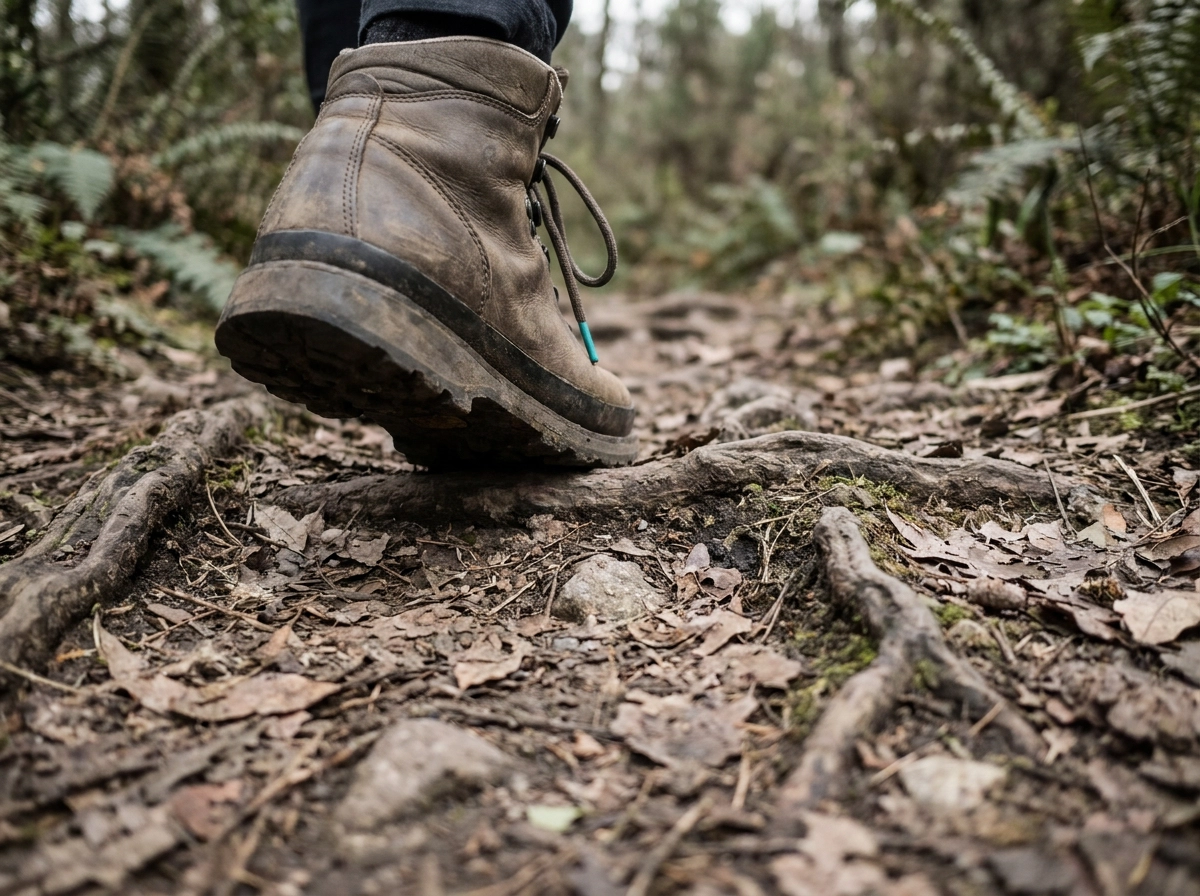
Climbs and descents are a regular feature. Clifftop sections involve short, sharp elevation changes, and dropping into river valleys means negotiating timber and earthen steps cut into the steeper slopes. None of it is technical, but your legs will know they’ve worked.
Tidal timing matters at key crossings. Beach sections at Johanna Beach and Aire River can be impassable at high tide, so check tide times the night before and plan your departure from camp accordingly. This is not an optional precaution.
The Southern Ocean does not negotiate. Wind, salt spray, and rain arrive with very little warning, regardless of what the forecast said at breakfast. The clifftop sections are fully exposed with no tree cover to duck behind, so keeping a waterproof layer accessible rather than buried in your pack is a habit worth forming from day one. If you’ve ever wondered why terrain and weather management matter on coastal trails, the Kokoda Trail offers a useful comparison point, though the Southern Ocean has its own particular brand of unpredictability.
Grade 3 is accessible, but it asks something of you. Daily distances reach up to 20km with genuine elevation change. Reasonable base fitness and fully broken-in footwear are not suggestions; they are the difference between enjoying the walk and enduring it.
Campsites Along the Great Ocean Walk
Knowing what the trail throws at you underfoot is one thing; knowing where you’ll sleep each night is another. The good news is the Great Ocean Walk has a well-designed campsite network built around the daily stages.
The six designated campsites sit at Shelly Beach, Parker Inlet, Aire River, Johanna Beach, Ryan’s Den, and Devils Kitchen, each timed to align with a natural day’s end. Facilities are simple but functional: tent platforms or cleared areas, and composting toilets. This is genuine backcountry camping, not a caravan park.
Bookings are essential. Campsites are managed by the Great Ocean Road Authority and must be reserved in advance through their booking system. During peak season (October through April), popular sites fill weeks or even months ahead, so securing your dates early is one of the most important steps in the planning process.
Water is not guaranteed at every site. Some campsites have tank water; others require you to carry enough between reliable water points. Conditions also change seasonally. Before you leave home, check the current status of each site so you can plan your carry capacity accordingly. A filter or purification tablets are smart backup regardless.
All campsites are walk-in only. There is no vehicle access, which means every piece of gear for six nights out, including your shelter, sleeping system, and cooking setup, lives in your pack. This is a key reason pack weight discipline matters so much on this trail.
If the logistics feel daunting, a guided trip like the Take Shape Adventures Great Ocean Road Hike handles campsite bookings as part of the package, removing one of the more time-consuming pieces of self-guided planning entirely.
What to Pack for the Great Ocean Walk
Since everything you carry must fit in your pack and survive seven days on your back, what you bring deserves careful thought.
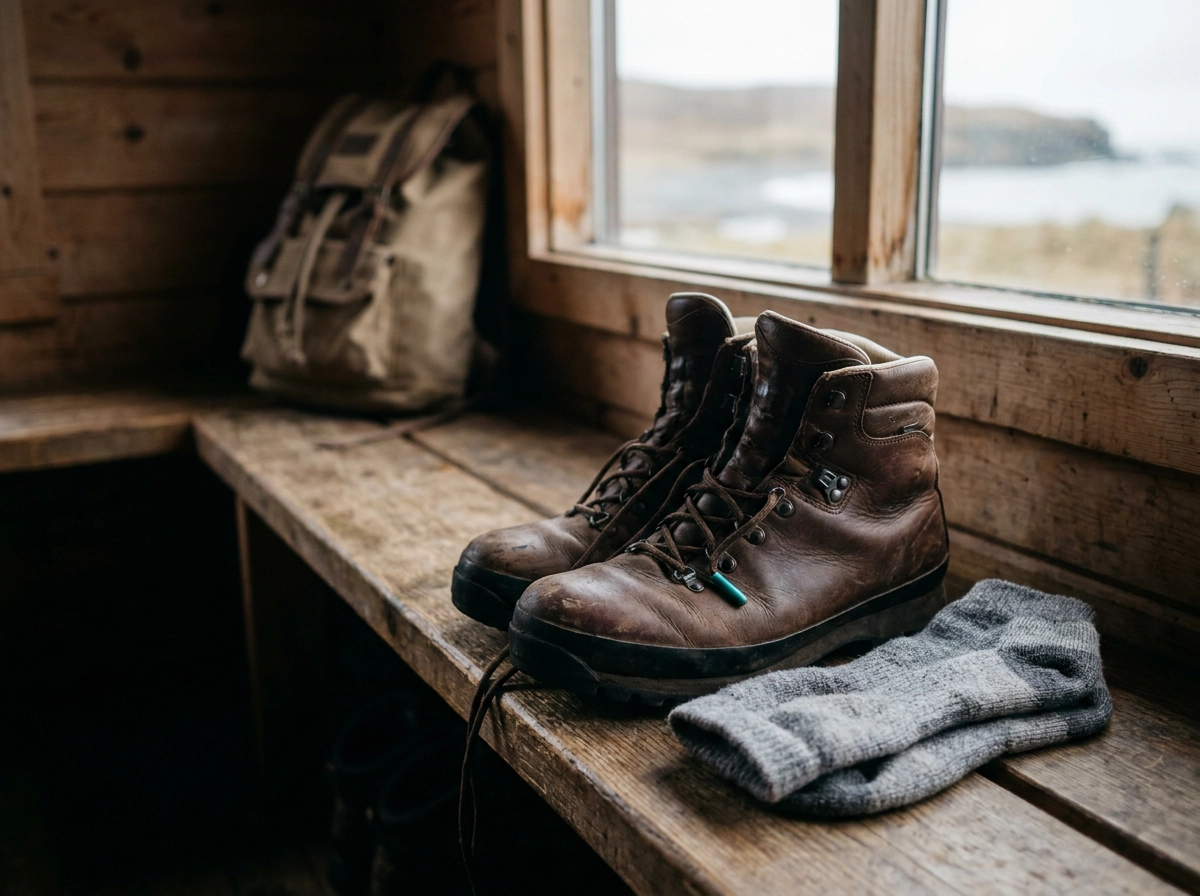
Footwear first. Waterproof trail shoes or lightweight hiking boots with good ankle support and aggressive grip are the right choice for the mixed terrain. The non-negotiable rule: wear them on multiple long walks before you start. Blisters on day two become a serious problem by day five.
Clothing: layer for the Southern Ocean. Conditions change fast on this coastline, so build your kit around three layers:
- A moisture-wicking base layer next to your skin
- A mid-layer fleece or lightweight down jacket for warmth
- A fully waterproof and windproof shell as your outer layer
All three are essential, not optional.
Sun protection. Exposed clifftop sections offer zero shade, and UV levels on the Southern Ocean coast can be extreme even on overcast days. Pack SPF 50+ sunscreen, a wide-brimmed hat, UV-protective sunglasses, and lightweight sun-protective clothing. The same layering discipline applies here as it does for cold weather. If you want more detail on packing smart for multi-day walks, the Mount Kosciuszko hike guide covers these principles well.
Water. Carry at least 2 to 3 litres at a time given the variable supply between sites. Bring a filter or purification tablets as backup for tank water or creek sources.
Navigation. Mobile coverage drops out across significant sections of the trail. Download an offline map via Avenza Maps or carry a dedicated GPS device, and keep a physical map as a backup.
Pack weight. Target a base pack weight under 10 kg. Prioritise a sleeping bag rated to at least 5 degrees Celsius, a lightweight tent or bivy, and a compact cooking setup. Every extra kilogram compounds over seven consecutive days.
Flora and Fauna to Look for Along the Way
One of the genuine rewards of seven days on this trail is how dramatically the landscape shifts around you. The walk passes through three distinct ecosystems: coastal heath and scrubland on the clifftops, cool temperate rainforest in the Otway gullies, and coastal wetlands near river mouths. Each zone supports its own plant and animal communities, so the wildlife experience stays fresh from day one to day seven.
What You Might See
Keep your eyes open near campsite clearings at dawn and dusk. Eastern grey kangaroos, swamp wallabies, echidnas, and ringtail possums are all commonly spotted during those quieter hours when animal activity peaks.
Birdlife is a genuine highlight throughout the walk. Inland sections reward patience with southern emu-wrens, yellow-tailed black cockatoos, and kookaburras. Step out onto the clifftop sections and the scale shifts entirely, with albatross and shearwaters riding the Southern Ocean winds below you.
At the coastal rock platforms near Moonlight Head and Cape Otway, scan the water for seals hauled out on the rocks. During winter and spring, southern right whales migrate through these waters close to shore, and the clifftop vantage points make for exceptional sightings.
What You Might Spot in the Plants
Flora changes just as noticeably as the fauna. On the clifftops, grass trees (Xanthorrhoea), silver banksia, and coastal tea tree are the defining species. Drop into the Otway gullies and the mood shifts completely: mountain ash, myrtle beech, and towering tree ferns form a dense rainforest canopy that feels a world away from the exposed coast above.
Important Wildlife Safety Advisory
A current H5N1 avian influenza advisory is in effect for this region. If you encounter any sick or dead birds or wildlife on the trail, do not touch them. Note the location and report it to the Emergency Animal Disease Hotline on 1800 675 888.
If wildlife watching has you hungry for more Victorian nature walks, the Complete Guide to Hiking the Main Yarra Trail is worth a look for your next adventure closer to Melbourne.
The Best Features and Highlights Not to Miss
Beyond the wildlife, the trail itself delivers a sequence of landmarks that stay with you long after you’ve unlaced your boots.
Cape Otway Lighthouse is the oldest surviving lighthouse on mainland Australia, built in 1848 and sitting just a short detour off the main trail. Standing here puts the so-called Shipwreck Coast in sharp perspective; before this light existed, the passage between the Australian mainland and King Island claimed dozens of vessels and hundreds of lives.
Moonlight Head rises as one of the highest coastal cliffs on the Australian mainland, with sweeping views along the coastline in both directions. On a clear day, look carefully and you can spot the rusting remnants of the SS Fiji, wrecked here in 1891, still visible from the clifftop. It is a striking reminder that this coastline has never been gentle.
The Otway Ranges rainforest gullies between Aire River and Johanna Beach offer the trail’s most dramatic change of scene. Ancient myrtle beech and towering tree ferns close in overhead, the light drops, and the atmosphere shifts completely. After days of open clifftop exposure, these gullies feel genuinely primeval.
Johanna Beach is one of the great arrivals on the walk. You descend through coastal hills to find a long crescent of raw, exposed surf beach that feels entirely removed from the world. The effort of the climb down makes the reward feel earned.
The Twelve Apostles are, of course, the finish line. Arriving here on foot after seven days on the Southern Ocean coast is a fundamentally different experience from pulling up in a coach. The limestone stacks carry real emotional weight when you have walked to them.
Throughout the entire route, interpretive signage acknowledges the deep cultural significance of this Country to the Eastern Maar and Wadawurrung peoples. Take the time to read it; the trail’s meaning runs considerably deeper than the scenery.
When Is the Best Time to Hike the Great Ocean Walk?
Knowing what’s waiting at the Twelve Apostles makes you want to get out there immediately, but choosing the right season will shape the whole experience.
Autumn (March to May) is widely considered the sweet spot. Temperatures are comfortable, the summer crowds have cleared out, campsites are easier to book, and the coastal light is genuinely beautiful for photography. If you only have one season to choose, this is it.
Spring (September to November) rewards walkers with wildflower blooms across the coastal heath and warming days. The trade-off is higher rainfall and creek crossings that can run fast after winter, so trail conditions are more variable. Check conditions carefully before each stage.
Summer (December to February) is the busiest period by a significant margin. Campsite bookings can fill months in advance, exposed clifftop sections can get genuinely hot, and with limited shade along much of the route, sun protection becomes even more critical than usual. If you walk in summer, book early and carry extra water. Planning international trails in peak season brings similar challenges; our guide to hiking the Dolomites covers crowd strategies that translate well.
Winter (June to August) offers the most dramatic ocean scenery and the best chance of spotting southern right whales from the clifftops. The trade-offs are real though: wet tracks, cold overnight temperatures, and short daylight hours mean you should have solid cold-weather camping experience before attempting the walk in these months.
Regardless of when you go, check the Great Ocean Road Authority website for trail closures before you leave home. Landslips and storm damage can close sections of the route with little notice, and a quick check saves a lot of frustration on the trail.
Practical Tips for First-Time Multi-Day Hikers
Once you have picked your season, the next step is getting your body and your logistics ready. Here is what first-timers consistently wish they had sorted earlier.
Start your fitness training six to eight weeks out. Build up to day hikes of 12km or more that include real elevation, then add loaded pack sessions so your body adapts to carrying weight on consecutive days. Seven days on trail is a very different demand from a single weekend walk.
Book campsites the moment the window opens. Popular sites on the Great Ocean Walk fill months ahead during peak season. Bookings are managed through the Great Ocean Road Authority, so get onto their platform early rather than assuming availability will still be there when you are ready.
Break in your footwear completely before you go. Wear the exact shoes or boots you plan to hike in for at least two or three long days out beforehand. New footwear over a seven-day trail is one of the most reliable ways to end up with debilitating blisters by day three. Now it’s your turn to get those kilometres in your legs before you hit the Great Ocean Walk.
Decide early whether you are going self-guided or guided. Self-guided gives you flexibility and lower upfront cost, but requires you to independently manage transport at both ends, campsite bookings, resupply, and navigation. A guided experience with Take Shape Adventures handles all of that, plus you gain experienced leadership and the genuine camaraderie of a group.
Pack a multi-day first aid kit. Include blister treatment, anti-inflammatories, bandaging, and any personal prescriptions. Medical facilities are a significant distance from most sections of the trail, so self-sufficiency here is not optional.
Walk It With Take Shape Adventures
If you’d rather hand off every logistical headache and simply show up ready to walk, Take Shape Adventures offers a fully guided Great Ocean Road Hike built to do exactly that. Transport to Apollo Bay, the return transfer from the Twelve Apostles, and campsite bookings are all taken care of, so your pre-trip energy goes into training and excitement rather than spreadsheets.
The trip is particularly well suited to solo travellers. You get the social energy and camaraderie of a group without the effort of assembling one yourself. Everyone who joins is there for the same reason, which makes for an easy, natural sense of community on the trail.
The experience is designed around a clear philosophy: real challenge paired with thoughtful comfort. This is genuine wilderness walking, not a watered-down version of it. But the curation means the harder edges of a seven-day coastal hike are smoothed just enough to leave room for enjoyment rather than just survival.
Walking with an experienced guide also means the trail comes alive in ways a map simply cannot deliver. The ecological quirks of the Otway gullies, the maritime history layered into the Shipwreck Coast, the geological story behind the limestone stacks at the finish: a knowledgeable guide contextualises all of it in real time, at the exact spot where it matters.
For full itinerary details, what is included, upcoming departure dates, and booking information, visit the Take Shape Adventures Great Ocean Road Hike page.
Ready to Take on the Great Ocean Walk?
Whether you go self-guided or with a group, the planning checklist is the same: book your campsites well ahead of your trip, lock in transport at both Apollo Bay and the Twelve Apostles, invest in properly broken-in footwear, pack for the Southern Ocean’s moods, and pick a season that matches what you want from the experience.
The good news is that none of this requires elite fitness or years of hiking experience. The Great Ocean Walk is Grade 3, a trail that participants aged 10 to 82 have completed on guided trips. It asks for commitment and reasonable preparation, not a sporting background.
Your next step is whichever feels most natural right now:
- Book your first campsite through the Great Ocean Road Authority before the dates you want disappear
- Download the trail map and start matching daily stages to a rough itinerary
- Reach out to Take Shape Adventures if you’d rather hand the logistics to someone else and just show up ready to walk
Whichever path you choose, keep this in mind: standing at the Twelve Apostles after seven days on foot along the Southern Ocean coast is something genuinely different from every other way of seeing this stretch of coastline. The scale of those limestone stacks hits differently when you’ve earned the view one step at a time. That feeling is available to you, and it starts with a single booking.
Conclusion
The Great Ocean Walk delivers something rare: a world-class coastal experience that is genuinely accessible to everyday hikers. Plan ahead by securing campsites early, arranging transport at both ends, and choosing a season that suits your goals. Pack smart, wear broken-in boots, and respect the Southern Ocean’s unpredictable weather. Whether you walk self-guided or join a supported group tour, the trail rewards preparation with unforgettable scenery at every stage.
Most importantly, do not let the logistics intimidate you. Hikers of all ages and fitness levels complete this walk every year.
Your move is simple: check campsite availability, download the trail map, or contact Take Shape Adventures to start planning today. Seven days from now, you could be standing at the Twelve Apostles having earned that view one step at a time. That experience is waiting for you.