

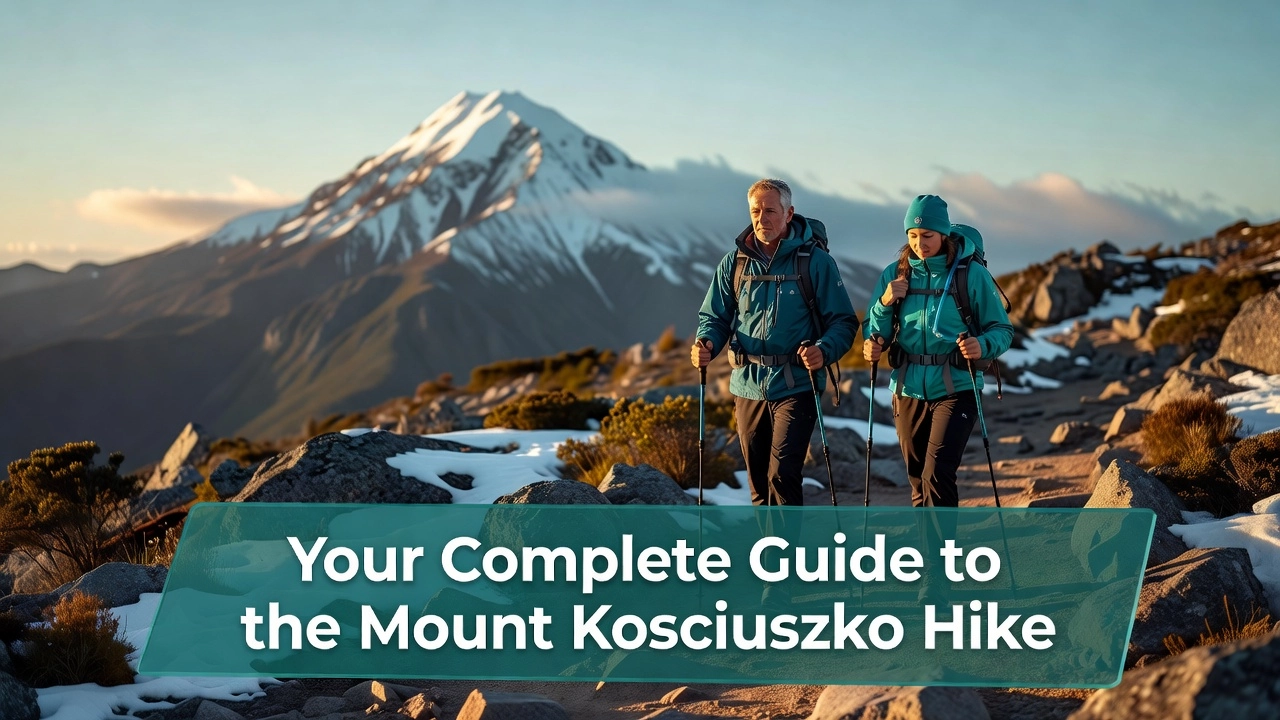
Standing on the highest point in Australia sounds like something reserved for experienced mountaineers, right? Well, here’s the exciting truth: it’s absolutely something a beginner can achieve with the right preparation and a little guidance.
The Mount Kosciuszko hike is one of Australia’s most accessible and rewarding adventures. At just 2,228 metres above sea level, this iconic trail welcomes walkers of all fitness levels, from seasoned hikers to first-timers lacing up their boots for the very first time. Whether you’re dreaming of ticking off Australia’s highest peak or simply looking for a stunning nature walk, this hike delivers on every level.
In this complete guide, we’re going to walk you through everything you need to know before hitting the trail. You’ll learn about the different route options, what to pack, how to prepare your body for the walk, and what to expect on the day. We’ve kept things simple and practical so that even if you’ve never hiked before, you’ll feel confident and ready to take on this incredible journey. Let’s get started!
What to Know Before You Go
Before you lace up your boots and head for the Snowy Mountains, there are a few important things worth knowing that will make your trip smoother, safer, and a whole lot more enjoyable.
Entry fees are charged per vehicle when you enter Kosciuszko National Park, and the cost changes depending on the time of year. During winter peak season (roughly the June long weekend through to the October long weekend), you’ll pay $29 per vehicle per day. For the rest of the year, including the prime summer hiking months, the fee drops to $17 per vehicle per day. If you’re planning multiple visits, an All Parks Pass can offer better value and is available through the NSW National Parks website. Just note that cameras monitor licence plates at entry points, so skipping payment isn’t worth the risk.
The sweet spot for hiking is December through to March or April, once the snow has melted and the trails are clear. This is when you’ll be rewarded with vibrant alpine wildflowers, milder temperatures, and the most stable conditions for beginners. March and April are particularly lovely if you prefer cooler weather and thinner crowds compared to the peak of summer.
Speaking of crowds, peak January school holidays and long weekends bring significant foot traffic, especially on the popular Thredbo summit approach. A simple fix is to make an early start, aiming to hit the trail at opening time. You’ll beat the rush, enjoy cleaner views, and be well clear before afternoon weather rolls in.
It’s also worth knowing that Kosciuszko National Park is a UNESCO Biosphere Reserve with designated wilderness zones and a fragile alpine ecosystem. The boardwalk sections you’ll walk on exist specifically to protect sensitive vegetation from erosion. Leave No Trace principles are strongly enforced here, so stay on marked trails and carry out everything you bring in.
Finally, plan your accommodation well in advance. The Snowy Mountains region welcomed approximately 1.2 million visitors and 2.2 million visitor nights in the year ending December 2025, and places fill up fast during school holidays. Booking early gives you far more choice and peace of mind.
Choosing Your Route: Thredbo, Charlotte Pass, or Main Range Loop
One of the first decisions you’ll need to make is which route to take. The good news is there are three solid options, each suited to different fitness levels, time frames, and goals. Here’s a breakdown to help you choose with confidence.
The Thredbo Chairlift Route: Best for Beginners and Families
If this is your first time hiking Mount Kosciuszko, the Thredbo Chairlift Route is almost certainly your best bet. At 13 km return with only around 300 m of elevation gain, it’s the shortest and most accessible path to the summit. The magic ingredient here is the Kosciuszko Express Chairlift, which whisks you up roughly 560 vertical metres from Thredbo village to Eagles Nest in about 15 minutes, removing the hardest climbing before you’ve even taken a step on trail. From there, a well-formed path with steel mesh boardwalks winds past lookouts, across the headwaters of the Snowy River, and up to Rawson Pass before the final push to the top. Rated Grade 3 and typically completed in 4 to 6 hours, it suits a wide range of ages and fitness levels. The trade-off is that this route is the busiest, particularly during summer school holidays, so expect company on the trail.
The Charlotte Pass Route: A Step Up in Effort and Reward
For hikers who want a more substantial experience without committing to a full loop, the Charlotte Pass Summit Walk is a fantastic middle ground. Starting at a lower elevation than the Thredbo chairlift drop-off point, this 18.6 to 19 km return route follows a management trail through genuinely beautiful alpine terrain. Along the way, you’ll pass the Snowy River crossing, the historic Seaman’s Hut built in 1929, and wildflower-dotted meadows before joining the final boardwalk section to the summit. Allow 6 to 8 hours for the full day out. This route is better suited to intermediate hikers who have some trail experience and a solid base of fitness. It offers a quieter, more immersive feel than Thredbo and a greater sense of accomplishment at the top. Worth noting: mountain bikes are permitted from Charlotte Pass to Rawson Pass, so you may share sections of this trail with cyclists. Bikes must be left at the bike stands at Rawson Pass, and all hikers walk the final 1.4 km to the summit.
The Main Range Loop: For Scenery Seekers Who Want the Full Experience
If you have the fitness, the time, and an appetite for the most spectacular version of this hike, the Main Range Loop delivers on every front. Covering approximately 22 to 23 km in a loop from Charlotte Pass, this route clocks in at 6 to 9+ hours with over 742 m of elevation gain and is rated Grade 4, moderate to hard. What sets it apart is the diversity of landscape: glacial features like Hedley Tarn and Blue Lake, wide open high-country vistas, rugged terrain, and far fewer crowds than the Thredbo route. Experienced hikers can also add detours to Mount Townsend (Australia’s second-highest peak) and Mount Twynam (the third-highest) for an even more impressive day out.
Quick Comparison at a Glance
To help you land on the right choice, here’s a simple summary:
- Thredbo Chairlift: 13 km return, 4 to 6 hours, ~300 m gain, Grade 3. Best for beginners, families, and first-timers.
- Charlotte Pass: 18.6 to 19 km return, 6 to 8 hours, Grade 3. Best for intermediate hikers wanting more trail time and scenery.
- Main Range Loop: ~22 to 23 km loop, 6 to 9+ hours, 742+ m gain, Grade 4. Best for experienced or well-conditioned hikers who want the full alpine experience.
Match your choice to your current fitness level and the time you have available, and you’ll be set up for a genuinely memorable day on Australia’s highest peak.
What You Will See Along the Way
One of the most rewarding parts of planning a Mount Kosciuszko hike is knowing just how much beauty is waiting for you along the trail. This isn’t just a walk to a trig point and back; it’s a genuine visual journey through some of Australia’s most extraordinary alpine landscapes.
Glacial Lakes That Will Stop You in Your Tracks
If you’re taking the Charlotte Pass route or the Main Range Loop, you’ll have the privilege of seeing Blue Lake and Lake Cootapatamba up close. Blue Lake is one of only four glacial lakes on mainland Australia, carved out by ancient ice thousands of years ago. The rocky walls surrounding it drop dramatically to shimmering water below, and if you time your hike to hit this section in the early morning, the light reflecting off the surface is genuinely breathtaking. Lake Cootapatamba adds another layer of ancient alpine drama to the experience. For beginner hikers especially, these unexpected moments of raw natural beauty make every extra kilometre completely worth it.
A Carpet of Wildflowers in Summer
If you’re hiking between late December and February, you’re in for a serious treat. The alpine slopes transform into a rolling blanket of colour, with silver snow daisies, golden billy buttons, and clusters of native wildflowers filling the meadows in every direction. This seasonal display is widely considered one of the most visually rewarding hiking windows anywhere in Australia. The contrast of delicate blooms against the wide-open alpine sky is something many first-time hikers describe as completely unexpected. It’s worth bringing a camera you actually know how to use.
History Written in Stone
About six kilometres from Charlotte Pass, you’ll pass Seamans Hut, a solid two-room stone shelter built in 1929 in memory of skier Laurie Seaman and his companion Evan Hayes, who lost their lives in a blizzard on the mountain the previous year. The hut was funded by Seaman’s American parents as both a tribute and a practical safety gift to future hikers. Standing beside it, you genuinely feel the weight of alpine history and a healthy respect for how quickly conditions can change up here.
The Summit View and the World Below
Reaching the top at 2,228 m (7,310 ft) on a clear day delivers a 360-degree panorama across the Snowy Mountains that is hard to put into words. The surrounding alpine plateau stretches out in every direction, creating a rare sense of vast, open wilderness that most Australians never get to experience. On a good day, you can even spot Mount Townsend, Australia’s second-highest peak, in the distance.
Boardwalks, Ecosystems, and Watching for Wildlife
The elevated boardwalk sections near the summit are more than just a practical trail surface; they’re a visible sign of how carefully this fragile ecosystem is being looked after. The alpine plants growing beneath your feet can take decades to recover from a single footstep off the track. Stay on the boards, and keep your eyes open. Attentive hikers occasionally spot mountain pygmy possums, one of Australia’s most endangered small mammals, sheltering among the boulder fields nearby.
What to Pack for the Kosciuszko Alpine Environment
Packing well for the Kosciuszko alpine environment is one of the most important things you can do for a safe and enjoyable summit day. The mountain sits at 2,228 m and the weather up there can shift quickly, so being underprepared is never worth the risk.
Clothing and Layering
Even in the middle of summer, temperatures above 2,000 m can drop sharply, especially when the wind picks up. A smart layering system is your best defence. Start with a moisture-wicking base layer made from merino wool or a quality synthetic fabric, which pulls sweat away from your skin and keeps you comfortable on the climb. Add an insulating mid-layer like a fleece or lightweight down jacket for warmth when you stop at the summit or hit a cold patch. Top it off with a waterproof and windproof shell to protect against rain, sleet, and that biting alpine wind. Tuck a warm beanie, gloves, and a neck gaiter into your pack too; they weigh almost nothing but can make a real difference up high.
Footwear
The trail transitions across several surface types, including sealed boardwalk, loose gravel, exposed rock, and sections that can be wet or muddy after rain. Waterproof trail shoes or light hiking boots with solid ankle support and a grippy rubber sole are the right choice here. Avoid road running shoes or casual sneakers; they simply do not offer enough traction or support for the terrain. Trekking poles are also a fantastic addition, helping with stability on uneven ground and taking pressure off your knees on the descent.
Sun Protection and Hydration
UV exposure increases significantly with altitude, so SPF 50+ sunscreen, UV-rated sunglasses, and a wide-brim hat are non-negotiable items. Reapply sunscreen throughout the day, particularly if you are sweating. For water, carry at least 2 litres per person on the Thredbo route and more if you are tackling Charlotte Pass or the Main Range Loop. There are no cafes or water stations on the trail. Pack high-energy snacks, a basic first aid kit with blister treatment, a fully charged phone with an offline maps app loaded, and a paper map as a backup. This Mount Kosciuszko hike guide offers a handy checklist worth reviewing before you head off.
Winter Hiking Essentials
If you are planning a winter visit between June and October, the packing requirements change significantly. Snowshoes and trekking poles are essential for safe movement through snow, and conditions including high winds exceeding 100 km/h, whiteouts, and ice make the mountain genuinely hazardous for unprepared hikers. The UIAA mountain medicine profile for Kosciuszko highlights self-sufficiency as critical, since the historic huts on the trail are not reliable emergency shelters. For winter trips especially, a guided or professionally supported experience is strongly recommended. Having an experienced guide alongside you in those conditions is not just reassuring; it is genuinely the safest way to experience the mountain in the colder months.
Safety on the Mountain: Alpine Weather and What to Watch For
If there’s one thing experienced alpine hikers will tell you, it’s that Kosciuszko does not care about your plans. The weather up here is genuinely unpredictable year-round, and that’s not an exaggeration designed to scare beginners off the trail. It’s just the reality of hiking at 2,228 m in an exposed alpine environment. Clear blue skies can give way to thunderstorms, heavy fog, or driving rain within an hour, and wind speeds at the summit regularly hit levels that would knock you sideways. Gusts exceeding 100 km/h have been recorded, with some storms bringing winds above 150 km/h. Before every trip, check the Bureau of Meteorology alpine forecast and the NPWS Alpine Safety page. If a cold front or severe weather warning is in the forecast, postpone your trip without guilt.
Timing Your Summer Hike Wisely
For summer visitors hiking between December and March, one of the smartest moves you can make is an early start. Aim to be on the trail before 8 am. Afternoon thunderstorms are a common feature of alpine summers, and the earlier you begin, the more likely you are to summit and descend before conditions deteriorate. Starting early also means you’ll beat the crowds. During peak season, particularly around Australia Day weekend, the trail gets genuinely busy and parking at Charlotte Pass fills fast. An early start gives you quieter trails, better photos, and a much more relaxed experience overall.
Winter Hiking Is a Different Beast Entirely
If you’re considering a winter hike, please take this seriously. Between roughly June and October, the mountain is snowbound, access roads close between Perisher and Charlotte Pass, and conditions can become life-threatening very quickly. Deep snow, ice, and wind chill create genuine hypothermia and frostbite risk, even for fit and experienced hikers who lack the right gear. Winter hiking here requires crampons, appropriate layering, waterproof and windproof shells, and a solid understanding of alpine travel. NPWS strongly recommends joining a guided experience with licensed professionals if you don’t have winter alpine skills.
Emergency Contacts and Staying Connected
Mobile coverage is limited or nonexistent across much of the trail, so don’t rely on your phone as your primary safety tool. Before you leave, tell someone your plans, your route, and your expected return time. The key emergency contacts are the NPWS Snowy Region Visitor Centre on 02 6450 5600 and Perisher Valley Police for mountain rescues. Consider carrying a Personal Locator Beacon, especially on longer or more remote routes.
Planning Ahead for 2026
A few broader factors are worth knowing as you plan your trip. Shifting snow patterns mean winter conditions are less predictable than they once were. Shoulder seasons carry increased bushfire risk, so monitor alerts through the NSW Rural Fire Service before travelling. Ongoing feral horse management in the park also continues to shape the landscape, with the population actively being reduced to protect the fragile alpine ecosystem. Staying informed through current NPWS alerts means no surprises when you arrive.
Going Guided or Self-Guided: Which Option Suits You?
Deciding whether to go self-guided or join a guided experience is one of the most personal choices you’ll make when planning your Mount Kosciuszko hike. Neither option is wrong, but the right one depends on your experience level, your group, and what you actually want to get out of the day.
Self-guided hiking suits people who have solid fitness, some prior experience in alpine or bush environments, and feel confident reading trail conditions and weather. The Thredbo Chairlift Route to Mount Kosciuszko is the best option for independent hikers, particularly beginners venturing out on their own for the first time. The trail is well-marked, the boardwalk sections are easy to follow, and the 13 km return distance with around 300 m of elevation gain is manageable for most people with moderate fitness. If you enjoy moving at your own pace, stopping when you like, and have done your preparation thoroughly, self-guided is a genuinely rewarding way to experience Australia’s highest peak.
Guided experiences, on the other hand, add real value that goes well beyond just having someone show you the way. A good guide brings the landscape to life, sharing the ecology, geology, Indigenous history, and alpine wildlife of the area in ways that a solo hiker simply won’t access on their own. For beginners, solo travellers, or anyone who feels uncertain about alpine weather, a guide also provides built-in safety oversight and the reassurance of having an experienced person in the group making calls when conditions change. There’s also a social dimension that’s easy to underestimate; sharing a significant hike with a small group of like-minded people often becomes one of the most memorable parts of the whole trip.
For those wanting to go deeper into the experience, multi-day guided options take the appeal even further. They remove the logistical weight of booking accommodation, planning meals, and figuring out transfers, so you can focus entirely on being present in the landscape. They also unlock more ambitious routes like the Main Range Loop with genuine confidence, because an experienced guide can monitor shifting weather patterns and adapt the plan in real time rather than guessing from a forecast.
Take Shape Adventures offers a Kosciuszko Walking Tour that brings all of this together beautifully. The small-group experience includes 3 nights in private ski-lodge accommodation, a supported summit hike to the top of Australia, and the kind of community and comfort that makes the whole adventure feel both meaningful and achievable. It’s a particularly smart choice for beginners who want the challenge without the stress.
Kosciuszko in 2026: Trail Conditions and What Has Changed
If you’ve been following the Mount Kosciuszko hike conversation over the past couple of years, you’ll know that things on the ground are always shifting. Here’s a practical snapshot of what’s changed heading into 2026, so you’re not caught off guard when you arrive.
Visitation and trail infrastructure are both trending upward. Kosciuszko National Park now welcomes approximately 2.355 million visitors annually, and that sustained pressure on the alpine ecosystem has prompted ongoing boardwalk maintenance, trail upgrades, and improved visitor dispersal signage across popular corridors. Some sections of the trail network have experienced temporary partial closures for vegetation works and construction, including trackhead upgrades in the Guthega area that are running through late 2026. Before you go, it’s worth checking the Kosciuszko National Park local alerts page for any current closures that might affect your planned route.
Feral horse management is one of the most talked-about issues in the park right now. The NSW government has active removal programs underway, including aerial culling operations, aimed at reducing horse numbers in line with conservation targets. This is a genuinely contested topic, with passionate views on both sides. As a hiker, what this means practically is that some trail corridors in the Main Range and surrounding areas may have temporary access changes or signage related to management operations. It’s worth being aware of this before you head out.
Snow patterns are less predictable than they used to be. Climate variability has shortened and shifted the traditional snow season, which means even early December summer starts can occasionally surprise you with residual snow or rapid weather changes on exposed ridges. Always check current conditions before departing regardless of the time of year.
Entry fees for 2026 sit at $17 per vehicle per day during the non-winter period, rising to $29 per vehicle during the winter peak season. Confirm the latest figures via the NSW National Parks website before you visit to avoid any surprise costs at the gate.
Finally, the growth in guided and wellness-integrated hiking experiences across the Snowy Mountains is very real. More hikers are seeking supported adventures that combine the physical challenge of reaching the summit with a more mindful, restorative experience. Take Shape Adventures is part of this movement, offering small-group experiences designed to blend genuine adventure with nature-based wellbeing.
Start Planning Your Kosciuszko Adventure
You’ve done the reading, you know the routes, and you understand what the mountain asks of you. Now it’s time to actually lock it in.
Start by picking the route that honestly matches where you are right now. The Thredbo route is the right call if you want accessibility and a genuine summit moment without the full-day commitment. Charlotte Pass gives you more trail time and a richer sense of the alpine environment. The Main Range Loop is the one to choose if you’re ready for a real challenge and want the scenery to stay with you long after the trip.
Once you’ve chosen, book early. The December to February peak season brings enormous visitor numbers to the Snowy Mountains, with the region recording around 1.2 million visitors and 2.2 million visitor nights in the year ending December 2025. Accommodation fills fast, so don’t leave it to the last minute.
Pack for the unexpected, always. Alpine weather shifts quickly regardless of what the forecast says, and being underprepared is the most common mistake first-timers make.
If you’d rather skip the logistics entirely and simply show up ready to walk, Take Shape Adventures’ Kosciuszko Walking Tour is worth a serious look. It’s a small-group, four-day lodge-based experience based out of Perisher Valley, with the Main Range summit hike, chef-prepared meals, professional guides, and all park fees included. It’s built around that challenge-and-recovery rhythm that turns a good hike into a genuinely memorable adventure.
Conclusion
Standing on the summit of Mount Kosciuszko is an achievement that truly anyone can reach with the right preparation. To recap the key points from this guide: choose the route that matches your fitness level, pack smart with layers and essentials, prepare your body with some pre-hike training, and respect the alpine environment by planning for changing weather.
The beauty of this hike is that it rewards effort at every level. Whether you complete the full summit trail or enjoy a shorter section, you will leave with a sense of accomplishment that stays with you long after you return home.
Now it is time to stop reading and start planning. Book your trip, lace up your boots, and get out there. Australia’s highest peak is waiting for you, and it is closer within reach than you ever imagined.