

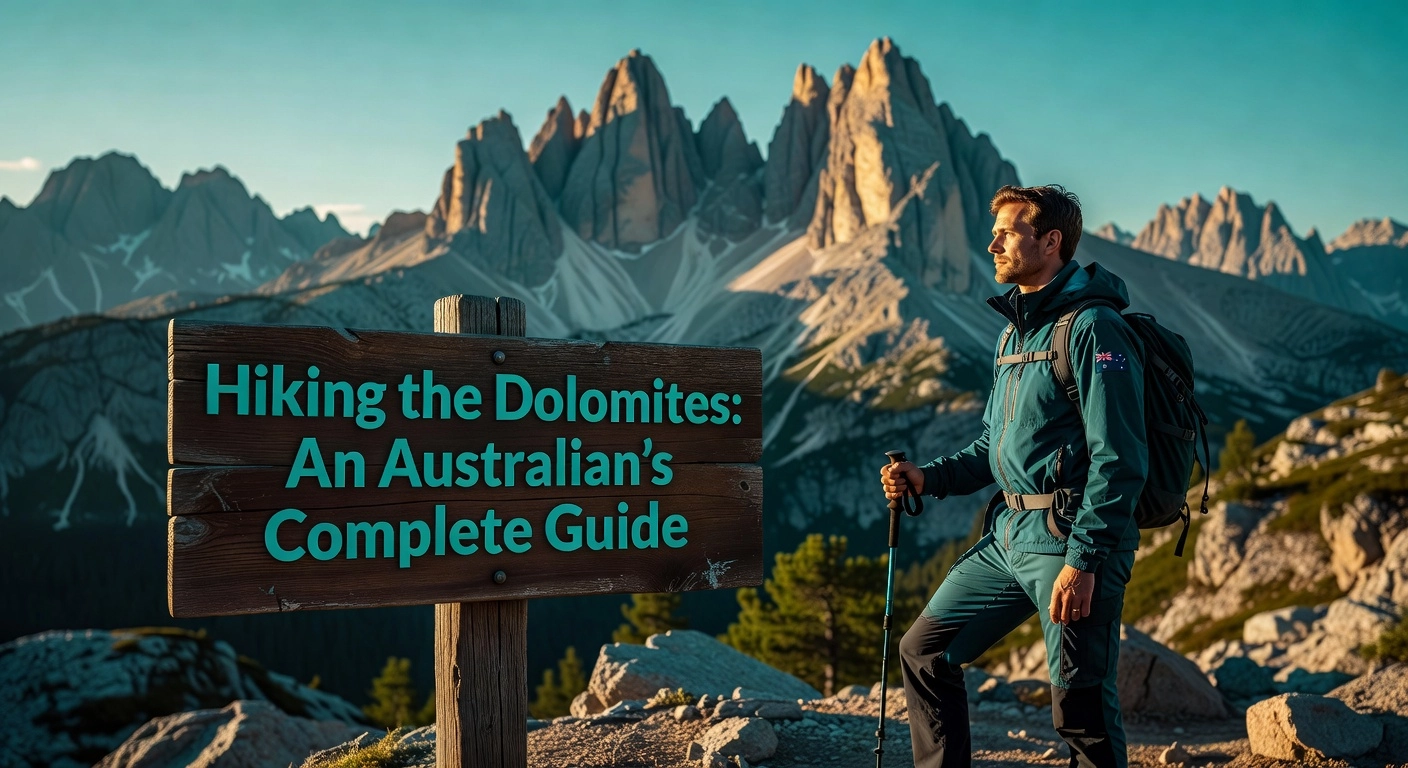
Picture this: you’re standing in the middle of northern Italy, surrounded by jagged pink-tinged peaks that look like they were carved by a fantasy novelist rather than actual geology. That’s the magic of the Dolomites, and trust me, as an Australian who made the journey halfway around the world to experience it, I can tell you it is absolutely worth every single kilometre of travel.
But here’s the thing. Planning a dolomites hike from Australia can feel seriously overwhelming. Which trails are actually beginner-friendly? What gear do you need? When should you go? How do you even get there from Down Under? I had all these same questions before my first trip, and I spent weeks trying to piece together reliable information.
That’s exactly why I put together this complete guide. Whether you’re a first-time hiker or simply new to European mountain trails, I’ve broken everything down into simple, actionable steps so you can plan your adventure with confidence. From the best beginner trails to practical packing tips and travel logistics, this guide has everything you need to make your Dolomites dream a reality.
Why the Dolomites Should Be on Every Australian Hiker’s Bucket List
If you’ve ever stood at the Pinnacle lookout in the Grampians and thought “I want more of this,” the Dolomites are calling your name. Tucked into the Southern Limestone Alps of northeastern Italy, this UNESCO World Heritage-listed landscape covers nine dramatic mountain groups and more than 3,600 marked hiking trails. That’s not a typo. From gentle meadow strolls to multi-day ridge traverses, the sheer variety here is unlike anything most Australian hikers have encountered in one place.
Think of the Grampians Peaks Trail as your warm-up act. That beloved 164-kilometre trail through Victoria delivers real ridge-walking satisfaction, bold sandstone scenery, and hard-earned views. The Dolomites take that same energy and multiply it across an entire mountain range. We’re talking sheer limestone walls rising more than 1,500 metres straight out of green valleys, jagged spires in every direction, and panoramic views that make the Pinnacle feel like a preview. The scale and vertical drama are genuinely breathtaking, especially for first-timers.
Here’s the part that surprises most beginners: the Dolomites are surprisingly welcoming to hikers of all fitness levels. An extensive network of cable cars and chairlifts whisks you to high-alpine terrain without hours of grinding uphill. Trails are well-signed and well-maintained. Best of all, the region has a beloved tradition of rifugios, mountain huts perched at altitude that serve hot pasta, local wine, and a warm bed. You can complete a multi-day hike here without carrying a tent or cooking a single meal.
The world has clearly taken notice. Since receiving UNESCO status, arrivals to South Tyrol have risen 64.3% and overnight stays have increased by 33.18%. That popularity is well-deserved, but it also means smart planning is essential, particularly around booking rifugios and choosing shoulder-season dates.
For Australian hikers, a two to three week Dolomites itinerary is the ultimate adventure-travel package: world-class trails, European culture, incredible food, wellness experiences, and memories that will outlast any jet lag.
When to Go: Seasons, Crowds, and the 2026 Olympics Factor
Timing your Dolomites hike well can mean the difference between a magical mountain experience and fighting through crowds that rival a Sydney CBD footpath at rush hour. Here’s what you need to know before you book.
The Main Season: Mid-June to Mid-October
The hiking season runs from roughly mid-June through to mid-October, which is when the mountain huts known as rifugios open their doors and high-altitude trails become snow-free and accessible. Most rifugios swing open around the third week of June, with the majority fully operational by late June. July and August offer the most reliable warm, dry weather for tackling high-alpine routes, but they also bring genuinely staggering crowds. UNESCO data shows Lake Braies receiving over 17,400 visitors per day at peak times, against a recommended carrying capacity of just 1,500 to 6,000. To put that in perspective, that’s more than double the capacity of the MCG squeezed into a single alpine lake circuit. Popular trails have recorded over 8,000 walkers in a single day, which is the opposite of the restorative wilderness escape most people are chasing.
The Sweet Spots: Late June and September
If you can be flexible, late June and September are the standout shoulder-season windows for a Dolomites hike. Late June brings blooming wildflowers, nearly full rifugio and cable car access, and far fewer hikers than the July-August peak. September is arguably even better, offering stable weather, dramatically lower accommodation costs, and that warm golden-hour alpenglow light that wellness travellers and photographers absolutely live for. October brings spectacular autumn foliage and blissfully quiet trails, but shorter daylight hours and the real risk of early snowfall make it a trickier option for beginners, with many high-elevation huts closing by mid-month.
The 2026 Olympics Factor
There’s an extra layer of planning to consider right now. The 2026 Milano Cortina Winter Olympics has brought significant construction activity to Cortina d’Ampezzo and surrounding areas through 2025 and into 2026, including road works, gondola upgrades, hotel renovations, and general infrastructure disruption. If you’re planning a summer 2026 trip, it’s worth checking current access conditions around core Olympic venues before committing. Areas like Val di Funes, Lago di Sorapis, and the Pale di San Martino group are excellent alternatives worth prioritising instead.
A Practical Note for Australians
For Australians, late September lines up beautifully with school holidays and the tail end of our winter, making it a genuinely practical planning window that also lands in the Dolomites’ sweet-spot shoulder season. It’s a rare alignment worth taking advantage of.
Book Your Rifugios Early
One last thing: sort your rifugio bookings before you even look at flights. Popular huts on routes like the Alta Via 1 fill months to over a year in advance, with reservations for the following summer often opening as early as September or October the prior year. Each hut runs its own separate booking system, so checking availability early is essential. Shoulder seasons offer more flexibility than July or August, but don’t leave it to chance.
The Best Dolomites Day Hikes (From Beginner-Friendly to Intermediate)
With over 3,600 trails winding through the Dolomites, choosing where to start can feel overwhelming. To make it easier, here are the six best day hikes for beginners and intermediate hikers, ranging from gentle meadow strolls to more adventurous alpine circuits.
1. Tre Cime di Lavaredo Loop (~10 km, moderate)
This is the one. The Tre Cime di Lavaredo loop is the most iconic trail in the Dolomites and one of the most photographed landscapes in all of Europe. The three jagged rock towers rising from the plateau are genuinely breathtaking in person, and the 10 km circuit around them passes rifugios, WWI history remnants, and views that will have you reaching for your camera every five minutes. The trail itself requires no technical skills, though the rocky terrain and steady elevation gain mean you’ll want solid footwear and a reasonable base fitness level.
The one catch? Everyone wants to do this hike. Peak daily visitor numbers have exceeded 13,400 at Tre Cime, more than double the recommended carrying capacity for the area. To get the most out of it, start your hike before 7am or hike the loop clockwise from Rifugio Auronzo to move against the main crowd flow. Shoulder season visits in late June or September also make a significant difference. Book your parking online well in advance as it sells out weeks ahead.
2. Seceda Loop (8 to 12 km, moderate)
If you want ridgeline views without a punishing climb, the Seceda Loop above Val Gardena is your answer. A cable car from the charming village of Ortisei whisks you up to the ridge, where sweeping views of the jagged Odle and Geisler peaks spread out in front of you. From there, you can tailor the hike to your fitness level, choosing anything from a short 2 km loop near the top station to a fuller 8 to 12 km circuit that pushes further along the ridgeline. This flexibility makes it one of the most beginner-accessible moderate hikes in the region. Pre-book your cable car tickets for Seceda online as queues can build quickly during peak summer weeks.
3. Adolf Munkel Trail / Sentiero delle Odle (~9.5 km, easy to moderate)
For anyone after a quieter, more mindful experience, the Adolf Munkel Trail is a genuine hidden gem. This forested valley walk beneath the dramatic Odle peaks covers around 9.5 km with roughly 400 to 500 metres of elevation gain, passing meadows, mountain streams, and the beloved Geisler Alm rifugio. It is one of the least crowded classic routes in the Dolomites, which makes it ideal for first-timers who want to ease into alpine hiking without the chaos of the main hotspots. The trail starts at Zannes parking in Val di Funes and takes around three to four hours for the standard loop. It is well-marked, family-friendly in sections, and genuinely beautiful throughout.
4. Croda da Lago Circuit (~11.5 km, moderate)
The Croda da Lago Circuit is a brilliant step up for hikers ready to explore beyond the main tourist corridors. This full loop takes you around Lago Federa, a high alpine lake framed by towering dolomite rock faces that stay impressive at every angle. At around 11.5 km with 800 to 900 metres of elevation gain, it suits intermediate hikers who want a full day out with varied terrain, including forest sections, boulder fields, and steeper climbs. Located near Cortina d’Ampezzo, it sees far fewer visitors than Tre Cime while delivering comparable scenery. Allow five to seven hours and plan a stop at one of the rifugios along the route.
5. Lago di Sorapis (~13 km return, moderate to hard)
The payoff for this one is extraordinary. Lago di Sorapis rewards hikers with a vivid turquoise lake set against near-vertical cliff faces, producing the kind of colour that looks almost unreal in photos. The approximately 13 km return journey involves some exposed sections, narrow ledges, and via ferrata-style terrain that requires confident footing and ideally some prior alpine trail experience. This makes it better suited to intermediate hikers rather than complete beginners. Start early to manage trail traffic on the narrower sections and to secure parking near Passo Tre Croci. September is a particularly magical time to visit when summer crowds thin out.
6. Alpe di Siusi / Seiser Alm Plateau (variable, easy)
If you are brand new to alpine hiking or simply want a day of wide-open beauty without any pressure, the Alpe di Siusi plateau is the perfect place to start. Covering more than 56 square kilometres, it is Europe’s largest high-altitude alpine meadow, and it offers some of the most accessible walking in the entire Dolomites. Cable car access from Ortisei means you arrive directly into the landscape, with flat to rolling terrain and panoramic views of the Sassolungo massif stretching in every direction. You can walk as little or as much as you like, with trail options ranging from gentle 2 km loops to longer half-day explorations. Rifugios dot the plateau, so there is always somewhere to stop for a coffee or a plate of pasta when you need it.
Multi-Day Trekking: Hut-to-Hut Adventures in the Dolomites
Ready to take your Dolomites experience beyond a single day on the trail? Hut-to-hut trekking is where the real magic happens, and the good news is that this style of adventure is far more accessible than most beginners expect.
The Alta Via 1: Your Multi-Day Benchmark
The Alta Via 1 is the starting point for most hikers considering their first multi-day Dolomites adventure. Stretching approximately 140 km from the impossibly picturesque Lake Braies in the north down toward Belluno in the south, this route typically takes between 7 and 10 or more days to complete depending on your pace and how many side trips you squeeze in. Along the way you pass through some of the most dramatic scenery the Dolomites have to offer, including the sculptural rock towers of Cinque Torri, the brooding Civetta massif, and the historically rich Passo Falzarego area with its World War One tunnels. Compared to other long-distance routes in the region, the Alta Via 1 is considered the most accessible in terms of technical difficulty, which makes it the ideal step up for hikers who have already ticked off a few solid day walks and are hungry for something more immersive.
Life Inside a Rifugio
The rifugio is the heart and soul of hut-to-hut trekking in the Dolomites. These mountain huts are far more than just a place to sleep; they are warm, sociable, occasionally rowdy dining rooms where hikers from Australia, Germany, Japan, and everywhere in between swap stories over bowls of hearty pasta, thick soups, local cheeses, and glasses of South Tyrolean wine. Accommodation is typically dormitory-style, though some huts offer limited private rooms for those who book early enough. One thing you absolutely cannot afford to leave until the last minute is your booking. Popular rifugios on the Alta Via 1 fill up months in advance, with the most sought-after huts often fully booked by February for the following summer season. Think of securing your hut reservations the same way you would book a popular restaurant back home for a big occasion, except the stakes are considerably higher when you are standing at 2,500 metres with tired legs.
Hiking Smarter with Luggage Transfer
One of the best-kept secrets of Dolomites trekking is the self-guided luggage transfer option. Specialist operators coordinate your rifugio bookings, supply maps and route notes, and arrange for your main bag to be transported between huts while you walk with nothing more than a comfortable daypack. Covering 15 to 20 km per day feels entirely different when you are not carrying a 15-kilogram pack uphill. For Take Shape Adventures members who want genuine challenge and beautiful scenery without the physical burden of full-pack hiking, this format is an outstanding fit.
Alternatives Worth Considering
If the Alta Via 1 feels like too big a commitment, or if booking windows have already closed by the time you start planning, the Rosengarten Traverse and routes through the Pale di San Martino group are genuinely spectacular alternatives. Both offer towering limestone scenery that rivals the headline routes, with typically less booking pressure and a slightly more intimate atmosphere on the trail.
Planning Your Australian Timeline
For Australian hikers, getting to the Dolomites means a significant international journey, so it is worth building your overall itinerary before locking in trail distances. A realistic trip fits into a 14 to 21-day window that accounts for long-haul travel days, one to two acclimatisation days before you start hiking at elevation, your core trekking days, and at least one or two recovery days built in mid-route or at the end. Commit to your timeline first, then work backward to choose a route that genuinely fits.
Planning Your Dolomites Hike from Australia: Logistics Made Simple
Getting yourself from Australia to the Dolomites takes a bit of planning, but once you break it down into steps, it’s very manageable. Here’s everything you need to know before you book that first flight.
Getting There: Flights and Ground Transfers
The most practical gateway for Australian travellers is Venice Marco Polo Airport (VCE), which connects easily via major hubs like Singapore, Dubai, or Doha. From Venice, you’re looking at roughly 2.5 to 3 hours to key hiking bases like Cortina d’Ampezzo or Bolzano by hire car or pre-booked shuttle. If you’re heading to the northern valleys around Val Gardena, Innsbruck Airport in Austria cuts that ground transfer down to around 1.5 to 2 hours. Milan Malpensa is a solid third option if you score a better fare or want to add a day or two in Milan. Whichever airport you choose, pre-book your onward transfer well in advance, especially if you’re travelling in peak season. Shuttles and hire cars fill up quickly between June and September, and arriving without a plan after a 24-hour flight is nobody’s idea of a good start.
Visas, Insurance, and Safety
The good news for Australian passport holders is that no visa is required for stays under 90 days in the Schengen Area, which includes Italy. What is absolutely non-negotiable, however, is comprehensive travel insurance. The Dolomites are genuinely remote in places, and the terrain demands respect. The region has recorded over 140 hiking-related deaths in a single year, with summer 2025 seeing rescue numbers spike significantly across the Italian Alps. Your policy must cover alpine hiking activities, emergency helicopter evacuation, and medical expenses in a mountain environment. Standard travel insurance often excludes these, so read the fine print carefully before you purchase.
Packing for Alpine Terrain (It’s Different from the Bush)
Your usual Australian trail gear won’t cut it here. The Dolomites demand mid-layer insulation like a fleece or lightweight down jacket, a waterproof and breathable shell jacket, and hiking poles, which are effectively essential on exposed ridges and rocky descents. Trail runners or light hiking boots designed for varied alpine terrain outperform the heavier boots many Australians favour for bush hiking. Weather can shift dramatically within an hour at altitude, so layering is everything. Keep your pack to a 30 to 40 litre size if you’re doing hut-to-hut, since rifugios provide bedding and meals.
Money, Meals, and Jet Lag
The currency is the Euro, and it pays to budget realistically. Rifugio half-board (dinner and breakfast) typically runs €40 to €60 per person per night, with single lift tickets costing €15 to €30. On multi-day routes, self-catering simply isn’t an option because rifugios don’t offer kitchen access to guests, so factor food costs into your daily budget from the start.
Finally, don’t underestimate jet lag. Italy sits roughly 8 to 10 hours behind Australia depending on daylight saving in both countries. Building one or two rest days into the beginning of your itinerary before you hit the trail is one of the smartest wellness decisions you can make. It improves your safety on trail, your enjoyment of the scenery, and your ability to acclimatise to altitude. Think of it as part of the adventure, not time wasted.
Mindful Hiking and Wellness in the Dolomites
There’s a quieter, more rewarding way to experience the Dolomites, and it has nothing to do with chasing the most-liked photo on Instagram. The mountains are increasingly drawing a different kind of traveller: one who wants to slow down, breathe deeply, and actually feel present in one of the world’s most spectacular landscapes. This shift toward slow travel and nature-based wellbeing in the Dolomites is exactly the philosophy that shapes the way Take Shape Adventures approaches hiking and wellness retreats. It’s not about ticking boxes; it’s about genuinely connecting with where you are.
Choose Immersion Over Instagram
Mindful hiking starts with trail selection. Instead of joining the 13,400-plus daily visitors cramming into Tre Cime di Lavaredo at peak season, consider quieter alternatives that reward patience and curiosity. The Adolf Munkel Trail in Val di Funes winds through forests and alpine meadows at the base of the dramatic Odle peaks, covering around 9.5 kilometres with a manageable elevation gain. It’s the kind of trail where you actually stop, look around, and notice things. The Alpe di Siusi plateau, Europe’s largest high-alpine meadow sitting at around 2,000 metres, offers gentle walking with sweeping 360-degree views, perfect for beginners who want grandeur without the scramble. Both trails prioritise the experience of being in the mountains over simply photographing them.
Recover Well at the Rifugio
Post-hike recovery in the Dolomites has its own beautiful ritual. Rifugios, the mountain huts scattered across the trails, are far more than just pit stops. They’re places to stretch out on a sun terrace, eat hearty locally sourced food like South Tyrolean dumplings and cured meats, and genuinely rest without a screen in sight. This restorative rhythm mirrors the retreat model that wellness-focused hikers already love, and it’s a welcome antidote to the race-to-the-summit mentality that clogs popular trailheads. Lingering over a meal at altitude with mountains on every side is, honestly, its own form of meditation.
Pair Your Trip with a Wellness Retreat
A growing number of adventurers are structuring their Dolomites trips around a yoga or wellness retreat, either to build fitness and mindfulness before departure or to decompress and integrate the experience on return. Take Shape Adventures’ retreat programming, which blends hiking, yoga, and nature-based wellbeing, is well-suited to support exactly this kind of integrated itinerary for members planning their first big international adventure.
Use Breathwork as a Practical Tool
At elevations between 2,000 and 3,000 metres, the air is noticeably thinner and your body works harder than it does at sea level. This is where yoga-based breathwork becomes genuinely practical rather than just philosophical. Syncing your breath with your steps, inhaling for three to four paces and exhaling for three to four, helps regulate effort and keeps anxiety in check on more exposed sections of trail. The same mindful hiking practices that make a wellness retreat feel transformative translate directly into moving more confidently through mountain terrain, and enjoying every single step of it.
Staying Safe and Hiking Responsibly in an Overtourism Hotspot
The Dolomites are breathtaking, but they come with real responsibilities. Whether you’re planning your first alpine hike or preparing for a multi-day adventure, understanding the safety and ethical considerations will make your trip better for you and for everyone who comes after you.
1. The crowd numbers should change how you plan
The scale of overtourism in the Dolomites is genuinely staggering. Tre Cime di Lavaredo records over 13,400 visitors per day at peak season, while Lake Braies exceeds 17,400 daily visitors. UNESCO-recommended carrying capacity for these sites sits between 1,500 and 6,000 visitors per day depending on classification, meaning the most popular spots are routinely hosting two to ten times the sustainable number of people. Trails erode, meadows get trampled, and wildlife is disturbed. Choosing a lesser-known alternative like the Adolf Munkel Trail or a quieter route in the Fanes-Sennes-Braies Nature Park is not just a personal preference; it is an active choice to protect a fragile landscape. Spread the love, and the landscape will thank you.
2. Alpine weather waits for nobody
Afternoon thunderstorms in July and August are not occasional surprises in the Dolomites; they are routine. Cloud systems build quickly after midday, and hikers caught on exposed ridges face real lightning and hypothermia risks. The golden rule is to start major hikes before 7am, completing all exposed sections well before noon. Pack a fully waterproof jacket and pants regardless of how blue the morning sky looks. Conditions at altitude change within minutes, and a summer morning in the mountains can feel like a winter afternoon by 2pm.
3. Download your maps before you leave Wi-Fi
Trails in the Dolomites are well-marked, but fog, unexpected diversions, and unfamiliar terrain can disorient even confident hikers. Download offline maps through apps like Komoot or Maps.me before you lose coverage, and carry a printed map as backup. Save the Italian emergency and mountain rescue number, 118, in your phone before you head out. Knowing that number, and being able to provide GPS coordinates if needed, could genuinely save your life or someone else’s.
4. Leave No Trace is non-negotiable here
High-altitude vegetation recovers incredibly slowly, so stepping off marked trails causes damage that can take decades to heal. Pack out everything including food scraps, avoid picking wildflowers (they are protected under Dolomites park regulations), and always use designated car parks rather than pulling onto roadside verges that crush fragile meadow edges. These rules exist because millions of visitors are all making small decisions that add up to enormous cumulative impact.
5. Consider going guided, especially for your first visit
For first-time alpine hikers, a guided experience dramatically reduces risk across every dimension: route-finding, weather judgment, rifugio bookings, pacing, and emergency response. Small-group guided formats, like the international adventure travel experiences offered by Take Shape Adventures, bring together local expertise with a manageable group size that minimises environmental impact while maximising safety. On multi-day routes especially, having someone who knows the terrain and the logistics removes the mental load so you can focus on actually enjoying the mountains.
Ready to Hike the Dolomites? Here Is Where to Start
You have done the hard reading, now it is time to put it all together. Start by locking in your season: late June or September are the sweet spots for fewer crowds, golden light, and rifugios that are fully open. Book your mountain huts as early as possible, ideally three to six months ahead for shoulder season and up to a year in advance for the most popular spots. Build your itinerary around two or three day hikes matched to your current fitness, add one multi-day route like a section of Alta Via 1, and protect at least one rest or wellness day for recovery and genuine mountain immersion.
For Australians, the logistics flow naturally when you plan with intention. Fly into Venice, allow yourself a day or two to shake off jet lag before heading north into the mountains, and consider departing during the shoulder season window that often lines up with Australian school holidays. It is a practical alignment that makes the trip feel a little less like squeezing in a holiday and a little more like a proper adventure.
If you want help preparing, connecting with fellow Australian hikers, and making the most of an international trip like this, Take Shape Adventures’ international adventure travel offerings and community membership are worth exploring.
The Dolomites reward those who plan with intention, move with curiosity, and choose depth over speed. That is exactly the kind of adventure worth taking shape for.
Conclusion
The Dolomites are genuinely one of the world’s most breathtaking hiking destinations, and the distance from Australia should never be a reason to cross them off your bucket list. To recap the essentials: choose trails that match your experience level, pack gear suited to rapidly changing mountain weather, time your visit between June and September, and plan your travel logistics well in advance to keep costs manageable.
You have everything you need to make this trip a reality. Start by booking your flights early, securing rifugio accommodation before peak season fills up, and downloading offline trail maps before you arrive.
The Dolomites rewarded my leap of faith with views I still think about daily. Now it is your turn. Pick one trail from this guide, put it on the calendar, and take the first step toward your own Italian mountain adventure.