

For the founders holding the whole thing up
Executive coaching for the founders and CEOs holding the whole thing up.
You built something real. A business that employs people, pays its way, and carries your name and your standards into the world. And somewhere along the way, you became its load-bearing wall.
I work one to one with a small number of founders and chief executives who are ready to lead from capacity instead of grip. This is that work.
Founder and CEO · Master of Applied Positive Psychology, University of Melbourne · PhD candidate, organisational psychology
The unspoken part
The conversation you cannot have inside your own business
There is a question most CEOs never say out loud:
Who do I talk to, when everyone I talk to works for me?
Your executive team needs you certain. Your board wants confidence. Your family has heard it all before, and you protect them from most of it anyway. So the doubts, the fatigue, the decision you have been circling for six months, the succession question you keep parking: they all live in your head, at two in the morning, unexamined.
You have probably considered coaching before. And you have probably dismissed it, because most of what gets sold as executive coaching is either recycled management theory from someone who has never run anything, or motivational noise dressed up in a lanyard.
I dismissed it too. Then I became the person who needed it and could not find it.
Who you are talking to
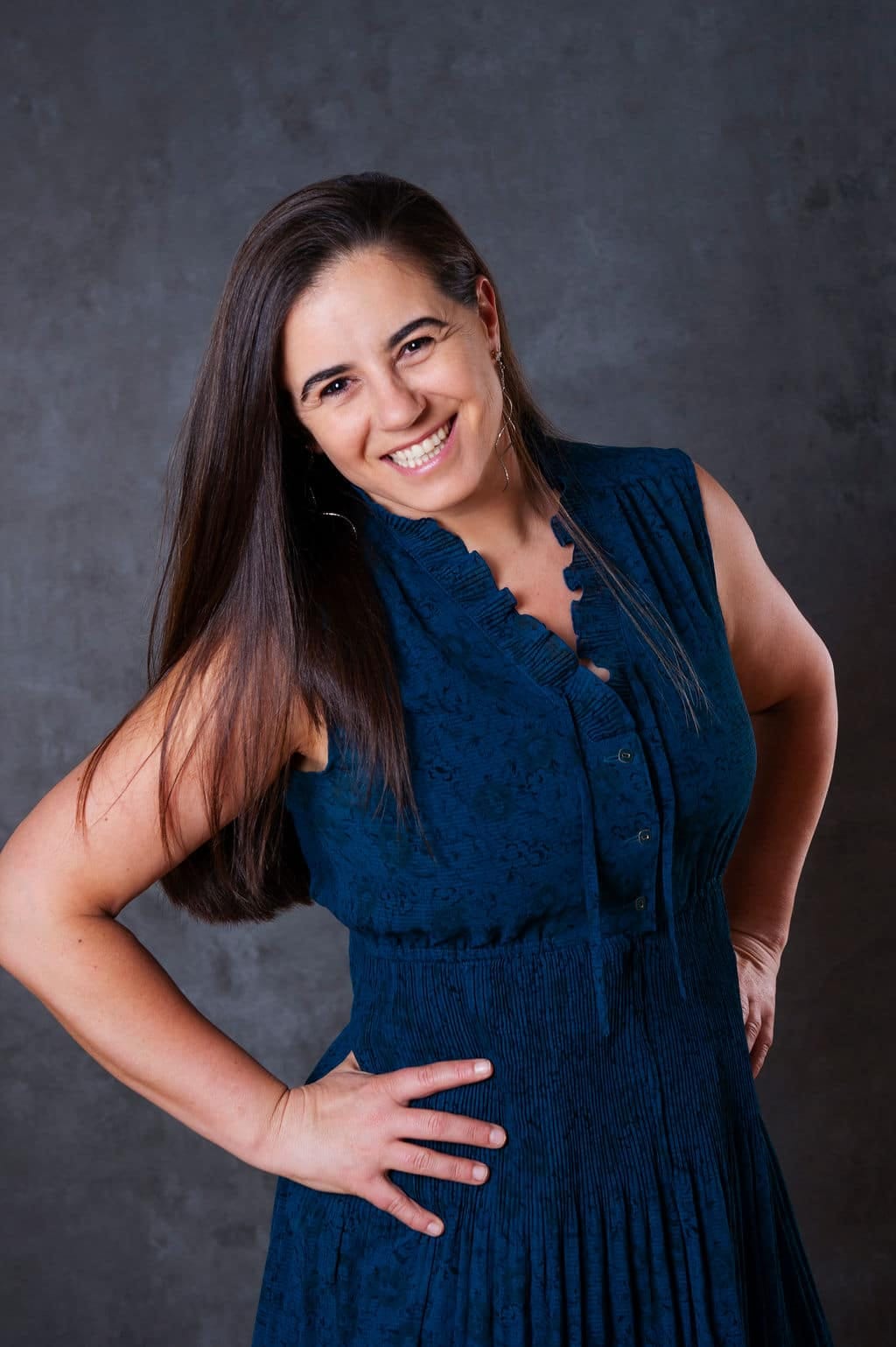
I am not a coach who studied business. I am a founder who studied the science.
I run Take Shape Adventures and Impact Adventures, a seven-figure adventure and leadership development company my husband and I built from nothing. I have made payroll in a bad month. I have carried a business through COVID while the entire travel industry fell over around us. I have hired wrong, priced wrong, held on too long, and rebuilt. I know what it costs to be the person the whole system leans on, because I was that person.
Then my body pulled the handbrake. An injury stopped me walking properly for months, right as the world shut down. Everything I had built my identity on, movement, achievement, being the strong one, was gone at once. It forced me to confront something I had been outrunning for years:
Control is not safety. Capacity is safety.
I did not respond with a mindset course. I went back to university. I completed a Master of Applied Positive Psychology and Wellbeing Science at the University of Melbourne to sit alongside my Master of Nutrition, conducted published-standard research on how people grow through structured challenge, and I begin my PhD in organisational psychology this year. My research focus is exactly what this page is about: how leaders build genuine capacity through challenge, and what happens to organisations when they do.
So when I sit across from you, you get both things at once. A founder who has carried what you carry. And a researcher who can tell you what the evidence actually says about pressure, recovery, decision-making, and leading other humans, stripped of the noise.
The evidence base
Positive leadership, taken seriously
My research field is applied positive psychology, and the branch of it that matters here is positive leadership: the study of what actually builds high-performing people and teams, rather than only what fixes broken ones. Stripped of the corporate gloss it often gets wrapped in, it is a rigorous evidence base about strengths, trust, meaning, recovery, and the conditions under which pressure grows people instead of grinding them down.
In our work together, that science is not a module. It is the operating system underneath everything:
01
You lead from your actual strengths, not from an idealised CEO template you were never going to be.
02
We build the psychological resources the research says hold leaders up: confidence with evidence behind it, resilience that renews rather than merely endures, and realistic optimism you can defend to a board.
03
Recovery gets treated as a leadership skill, not a reward for finishing, because the science is unambiguous that sustained judgement depends on it.
04
We use challenge deliberately, because the research and fifteen years of trails both say the same thing: people grow through the right difficulty, supported the right way.
No jargon survives contact with our sessions. If I cannot explain the evidence in plain language, I do not use it.
The idea underneath all of my work
Capacity is not how much you can endure. It is how much you can renew.
Most successful leaders have built their careers on endurance. Push harder, hold tighter, absorb more. It works, right up until the business outgrows what one person can absorb. Then the very strength that built the company becomes its biggest constraint, and its biggest risk.
The leaders who are hardest to knock over are not the ones gripping most tightly. They are the ones who have deliberately built capacity at three levels:
ME
Their own identity, energy, and decision-making, so they are not running the company on fumes and habit.
WE
A senior team that genuinely carries responsibility with them, rather than tasks delegated and quietly checked.
US
A culture that holds the standard when the founder is not in the room.
Coaching with me is the ME work. It is where every founder has to start, because you cannot build a team or a culture with more capacity than you have yourself.
A deliberately small practice
Who I work with
I keep my individual coaching practice deliberately small, and it is not for everyone. It works best if most of this is true:
—You founded, own, or run an established business. Not a side project. A real company with staff, customers, and consequences.
—You are past proving yourself. The business works. The question now is whether it can work without costing you your health, your family, or the next decade.
—You suspect you are the bottleneck, even if nobody in the building would dare say it.
—You are sceptical of coaching, and you would rather have an honest, uncomfortable conversation than a supportive, useless one.
—You are willing to be challenged. Not performatively. Actually.
If you are looking for someone to validate your existing plan, I will save you the money now: I am not her. If that sounds like you, the next step is a conversation.
Request a conversationHow the work happens
A defined arc, not an open tab
Engagements typically run six to twelve months, through three stages.
Stage one · first month
MAP
Where you actually are, not where you say you are. A structured capacity baseline covering energy, decision load, team reliance, and the gap between how the business runs and how it should. Ends with an honest written picture and an agreed territory for the work.
Stage two · the core months
BUILD
The working rhythm. Regular private sessions, walking sessions where geography allows, real decisions worked in real time, and deliberate practice at the patterns underneath them: what you hold, what you hand over, and what you have been avoiding.
Stage three · final phase
HOLD
What survives after we stop. We pressure-test the changes against real conditions, close the measurement loop against your baseline, and map the next layer of work, whether that is nothing, your senior team, or somewhere with mountains in it.
Some of our best work will not happen across a table. It will happen on a trail. Movement and nature change the quality of thinking, and the research on this is not soft. Melbourne clients get the Dandenongs. Everyone else gets very good use of a phone line and a standing invitation. I take a limited number of individual clients at any time, because this work does not scale and I refuse to pretend it does.
Beyond the individual work
When the work gets bigger than you
Here is what happens in almost every coaching engagement I run: somewhere around month three, the conversation stops being about you and starts being about them. Your senior team. The two direct reports doing the work of five. The successor who is not ready. The culture that still routes every hard call to your desk.
That is not a coaching problem. That is a capacity problem at the WE and US level, and it is exactly what Impact Adventures was built for: senior team development through structured outdoor immersion, designed and delivered on the same research base as our individual work.
For the work that cannot be done in ninety minutes, there is Higher Ground: a small-group immersion for leaders, in serious landscape, built on the same evidence base. Coaching clients get first access.
And the door works both ways. Some leaders start here and bring their team later. Others meet me first on an Impact Adventures program and realise the next layer of work is individual. If we have already shared a trail, coaching is not a restart. It is the continuation.
Explore Impact Adventures →What people say
“I have sat beside Tracey in the room with executive teams, and what she does is genuinely rare. She reads a senior group under pressure faster than anyone I have worked with, and she holds leaders to a standard most facilitators are too polite to ask for, with enough warmth that they thank her for it afterwards. The combination of real business experience, serious evidence, and the outdoors as her working medium does not exist anywhere else I have seen.”
Susan Delroi — Strategy Facilitator“Working with Tracey and Adrian was a genuinely great experience for our team. Getting out of our everyday environment meant connecting on a deeper level, and it created space to shift perspectives on how we build capacity to thrive through challenges. The focus moved from me to we, and that shifted how we solve problems. The team loved being outdoors and having fun whilst learning. I’d recommend Tracey and the team to anyone who wants to build capacity and wellbeing with their team.”
Jacomi Du Preez — Chief Risk Officer & Chief Revenue Officer, EnergyAustraliaThe record
Founder and CEO
Take Shape Adventures and Impact Adventures
Master of Applied Positive Psychology and Wellbeing Science
University of Melbourne
Master of Nutrition
Specialising in women’s health
PhD candidate
Organisational psychology, commencing 2026
Researcher and program designer
Leadership capacity, structured challenge, human performance
Fifteen plus years
Leading people through genuinely hard things, on trails and in boardrooms
The next step
Start with a conversation
I take on new individual clients by conversation, not by checkout. We talk for forty five minutes. You tell me the truth about where things are. I tell you honestly whether I am the right person, and if I am not, I will point you toward someone who is.
No pitch deck. No pressure. Just the first honest conversation you have had about this in a while.
You have already proved you can carry it alone. The next thing worth proving is that you do not have to.
Everything you write here is read by Tracey personally and treated as confidential.