

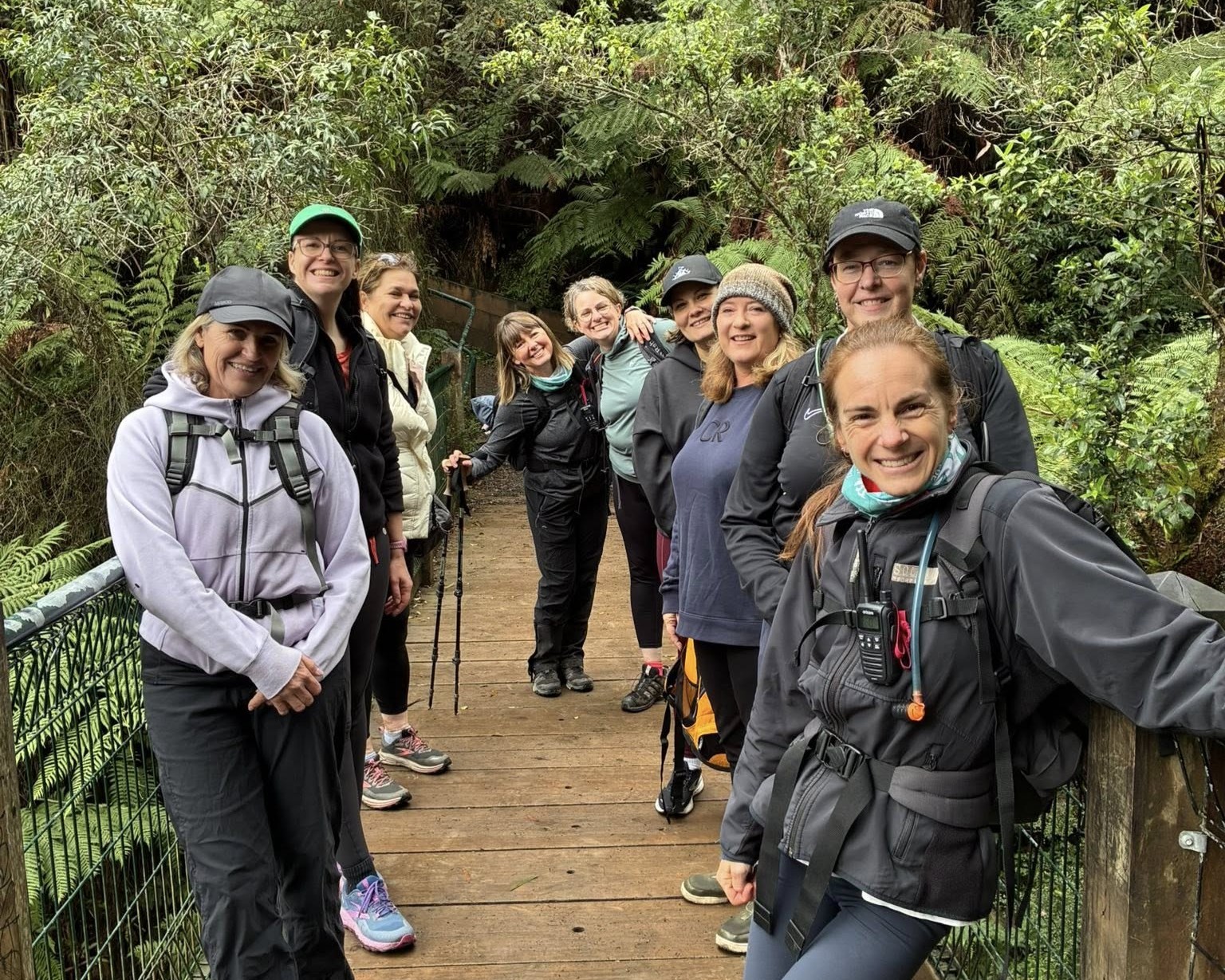
Let me ask you something. When did we decide that feeling restless at 45 was a problem to solve rather than an instinct to follow? Somewhere between the cultural mythology of red sports cars and the clinical language of “crisis,” we lost something important: the idea that midlife restlessness is not a warning sign. It’s a biological, psychological, and deeply human invitation to grow.
The “Crisis” Was Never the Right Word
The term “midlife crisis” was coined in 1965 by psychologist Elliott Jaques, who observed that many adults in their 40s experienced a confrontation with mortality, meaning, and direction. But what Jaques described as a crisis, modern research increasingly describes as a catalyst.
A landmark study following more than 28,000 adults over two decades (Blanchflower & Oswald, 2008) found that life satisfaction follows a U-shaped curve, declining through the 40s, hitting a natural trough, then rising sharply through the 50s and 60s. The trough isn’t a breakdown. It’s the bottom of a swing. The question is whether you use it to propel yourself forward, or whether you stay stuck at the lowest point.
Neuroscience has something to say about this too. Research published in Neuron (2015) shows that the brain’s prefrontal cortex, responsible for wisdom, perspective, and emotional regulation, continues maturing well into midlife. You are not declining. You are literally becoming more capable of nuanced thinking, long-term vision, and emotional intelligence than you were at 25.
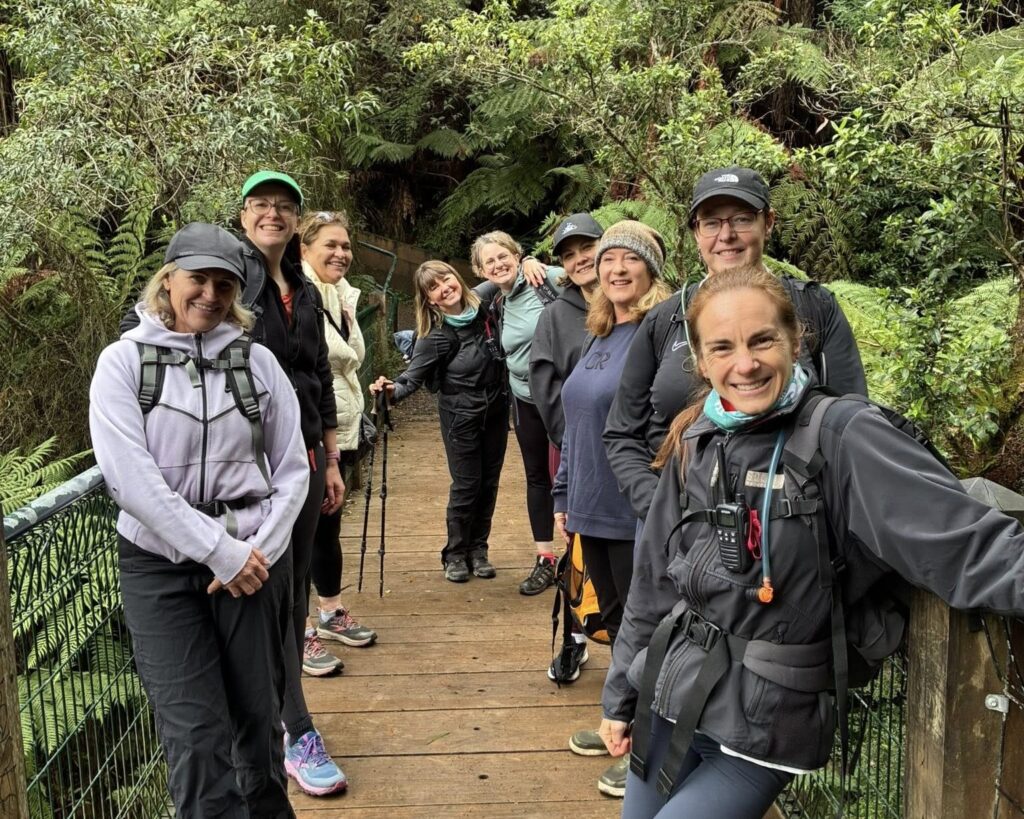
74%
of women 40-60 report a strong desire to challenge themselves physically
62%
of people report greater life satisfaction in their 50s than their 30s
2×
more likely to pursue new adventures post-50 than pre-30
What the Evidence Actually Tells Us
Here’s what decades of research across psychology, neuroscience, and longevity science converges on: the choices you make in midlife have an outsized impact on how you age, physically, cognitively, and emotionally. And those choices are far more powerful than genetics in determining your trajectory.
Physical Challenge & Longevity: Regular vigorous physical activity in midlife is associated with a 35% reduction in all-cause mortality and significantly delays the onset of chronic disease (Warburton et al., 2006). Adventure and outdoor activity deliver both the aerobic and strength components that matter most.
Nature & Mental Health: Spending 2+ hours per week in natural environments is associated with significantly better self-reported health and wellbeing (White et al., 2019, Scientific Reports). Even 20 minutes in a natural setting measurably reduces cortisol, your primary stress hormone.
Connection & Longevity: The Harvard Study of Adult Development, the longest-running study of adult life in history, found that the quality of our relationships is the single greatest predictor of health and happiness in later life. Not wealth. Not status. Connection.
Challenge & Self-Confidence: Physical challenge experiences produce measurable increases in psychological capital (self-efficacy, hope, resilience, and optimism) that transfer directly into everyday life (Luthans et al., 2007). Your body doing hard things teaches your mind it can too.
The Reframe That Changes Everything
We’ve been handed a cultural script for midlife that focuses entirely on what’s ending. Let’s rewrite it around what’s beginning.
| The Old Story | The Real Story |
|---|---|
| My best years are behind me | My wisest, most capable years are ahead |
| My body is slowing down | My body is asking to be challenged in new ways |
| I feel restless and lost | I’m being redirected toward what actually matters |
| Adventure is for younger people | Adventure is more meaningful now than it ever was |
| I should be happy with what I have | Wanting more isn’t selfish. It’s self-aware |
| Retirement means slowing down | A positive, active retirement is built now, in midlife |
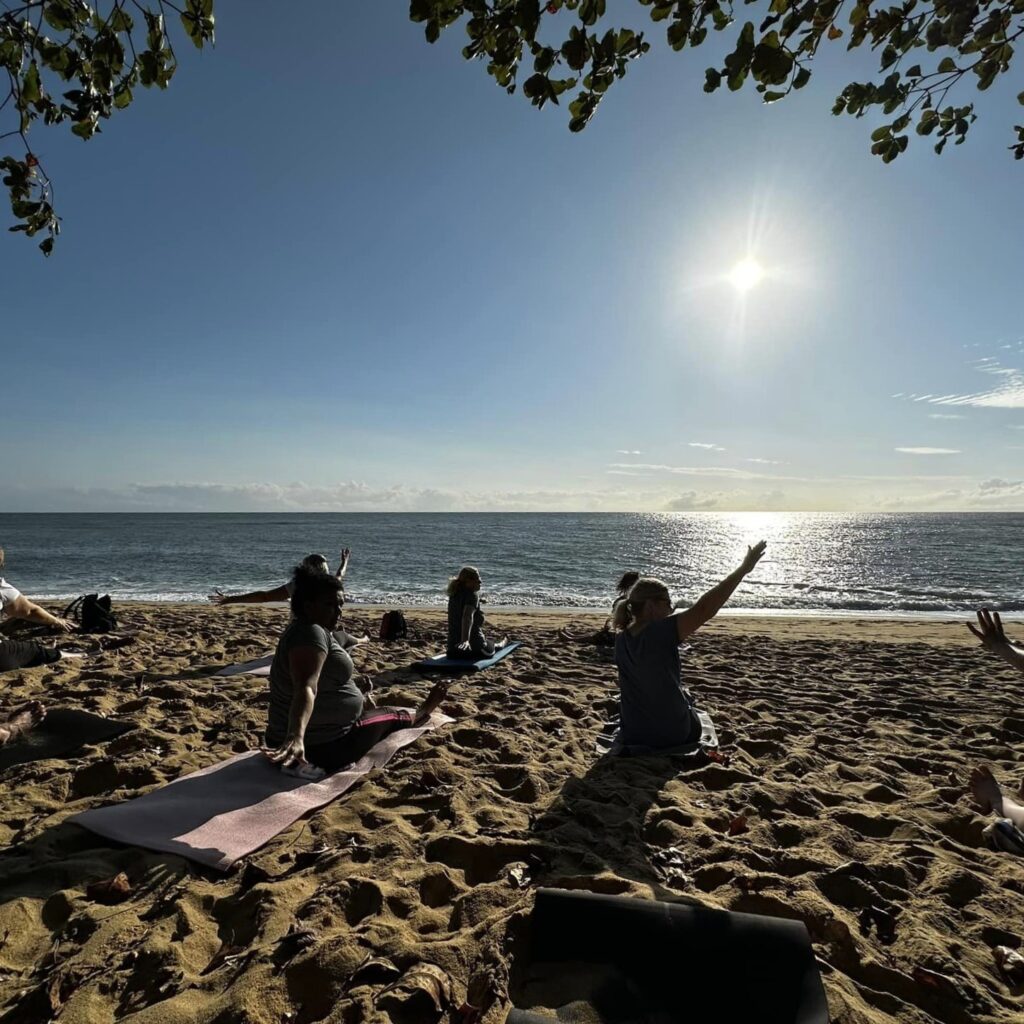
Why the Outdoors Is the Medicine
There’s a reason we keep coming back to the mountains, the coast, the trail. It’s not escapism. It’s exactlyism: getting exactly what we need.
When you put your body into physical challenge in a natural environment, several things happen simultaneously that no gym, no supplement, and no therapy session can fully replicate. Your nervous system downregulates. Your attention narrows to the present moment. Your sense of self expands beyond your role, your to-do list, your identity as someone’s mother, employee, or carer. You become, for a while, simply a person moving through the world.
And then you do something hard. You reach a summit you weren’t sure you could. You cross a ridge in the rain. You keep going when part of you wants to stop. And something shifts, not just for that day, but in the story you hold about yourself.
That shift is the research. Self-efficacy, your belief in your own capability, is one of the strongest predictors of health, longevity, and life satisfaction. And it’s built, not born. Physical challenge builds it in a way that’s direct, embodied, and real.
The Role of Belonging
Here’s what the loneliness research tells us plainly: we are in the middle of a belonging crisis. Adults over 45 are among the most socially isolated demographic in Australia. And social isolation carries health risks equivalent to smoking 15 cigarettes a day.
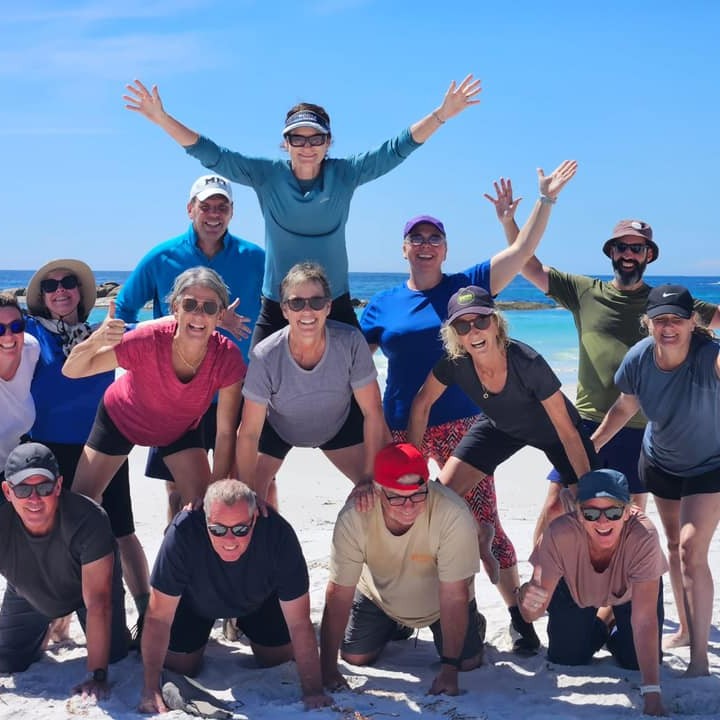
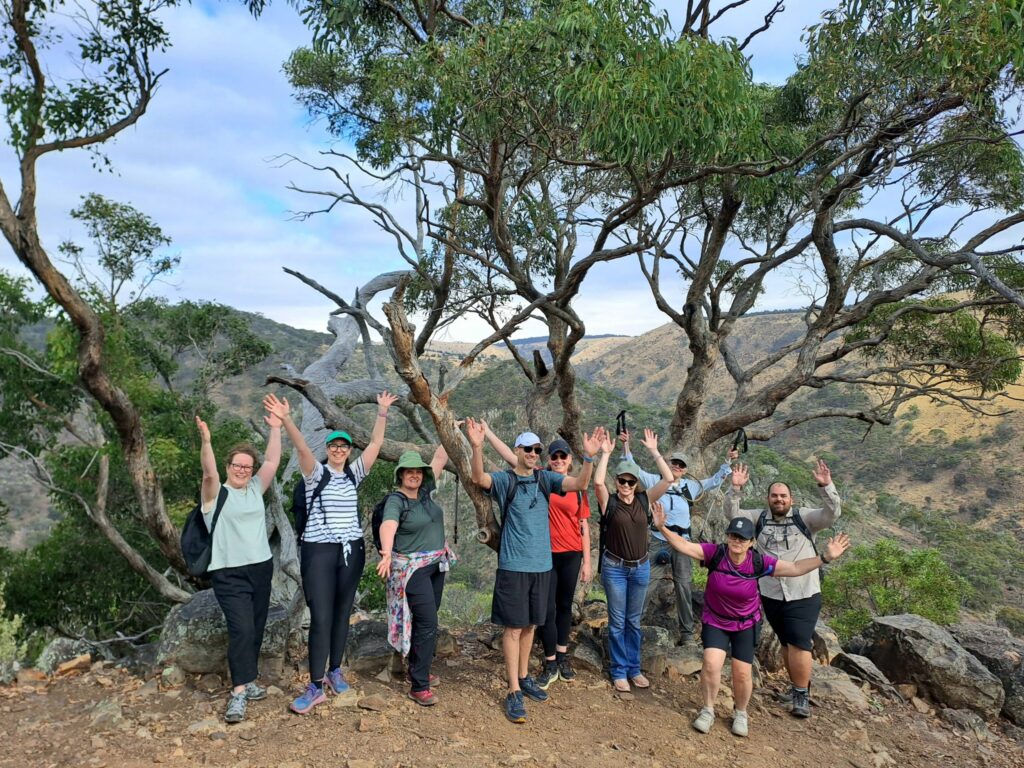
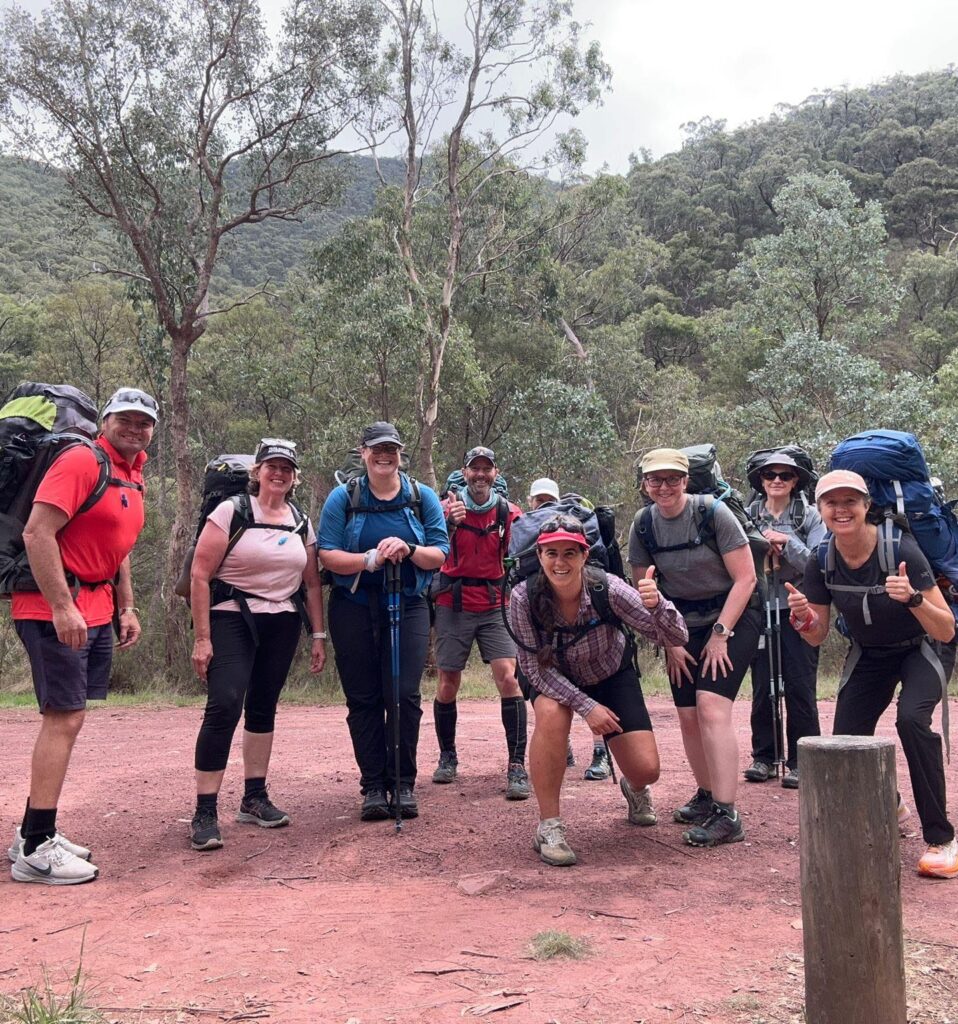
Adventure in a group context does something uniquely powerful. Shared physical challenge accelerates authentic connection in a way that dinner parties and networking events simply cannot. When you struggle alongside someone (when you both dig deep on a steep climb, or celebrate a finish line together) you form a bond that bypasses the usual social layers. You know each other, fast, in a way that matters.
This is not a bonus feature of outdoor adventure. It is one of its most important outcomes.
Building the Retirement You Actually Want, Starting Now
The research on positive ageing is unequivocal: the lifestyle patterns you establish in your 40s and 50s are the architecture of your 60s, 70s, and beyond. The people who age vigorously (who remain curious, capable, and connected) didn’t start at 65. They started now.
An active, adventure-oriented midlife is not just enjoyable in the present. It is literally an investment in a retirement defined by possibility rather than limitation. The strength you build now protects your independence later. The habits of challenge you establish now keep your brain plastic and your spirit resilient. The friendships you forge now on trails and in wild places outlast careers, circumstances, and geography.
This is the most practical argument for adventure I know: it works now and it pays forward.
Ready to write a different story?
Take Shape Adventures is built for women in exactly this chapter of life. Every experience is designed to challenge, connect, and leave you more certain of what you’re capable of.